

There is a quiet intensity to Jonah Mullins’ photography—an intimacy shaped by shadow, silence, and an unmistakable respect for the stories unfolding within each frame. Rooted in fine art portraiture and the vast, emotive landscapes of Appalachia, his work moves fluidly between human vulnerability and the stillness of the natural world. Drawn to black-and-white imagery, Jonah uses light and contrast not just as visual tools, but as emotional language, allowing each image to breathe, linger, and speak on its own terms. In this interview, Jonah opens up about his journey into photography, the power of authenticity, and the role storytelling plays at the heart of his creative process.
1. How did your journey into photography begin, and what first inspired you to pick up a camera?
I began shooting photography as a hobby eight years ago. My daughter, who is also a photographer, encouraged me to pick up a camera and go on photo walks with her. From there, I fell in love with the medium and have been shooting ever since.
2. How would you describe your visual style or artistic signature?
I would have to say that my artistic signature is moody photography with an emphasis on light and shadow, as well as rich tonal contrast. There is something about black-and-white imagery that lends itself perfectly to my style.
3. What themes or subjects do you find yourself repeatedly drawn to in your work?
I am drawn primarily to two distinct types of photography: fine art portraiture and nature/landscape photography. I have always been fascinated by human behavior, and exploring themes of vulnerability and authenticity has always been a sweet spot for me. I am also a child of Appalachia, and landscapes—particularly at golden hour—are my favorite.
4. Can you walk us through your creative process, from concept to final image?
It really depends on what I am shooting. For fine art or conceptual shoots, it begins with a collaborative discussion with my subject(s). As a photographer, I find that when we share a general vision for the tone and direction of the shoot, I do my best work.
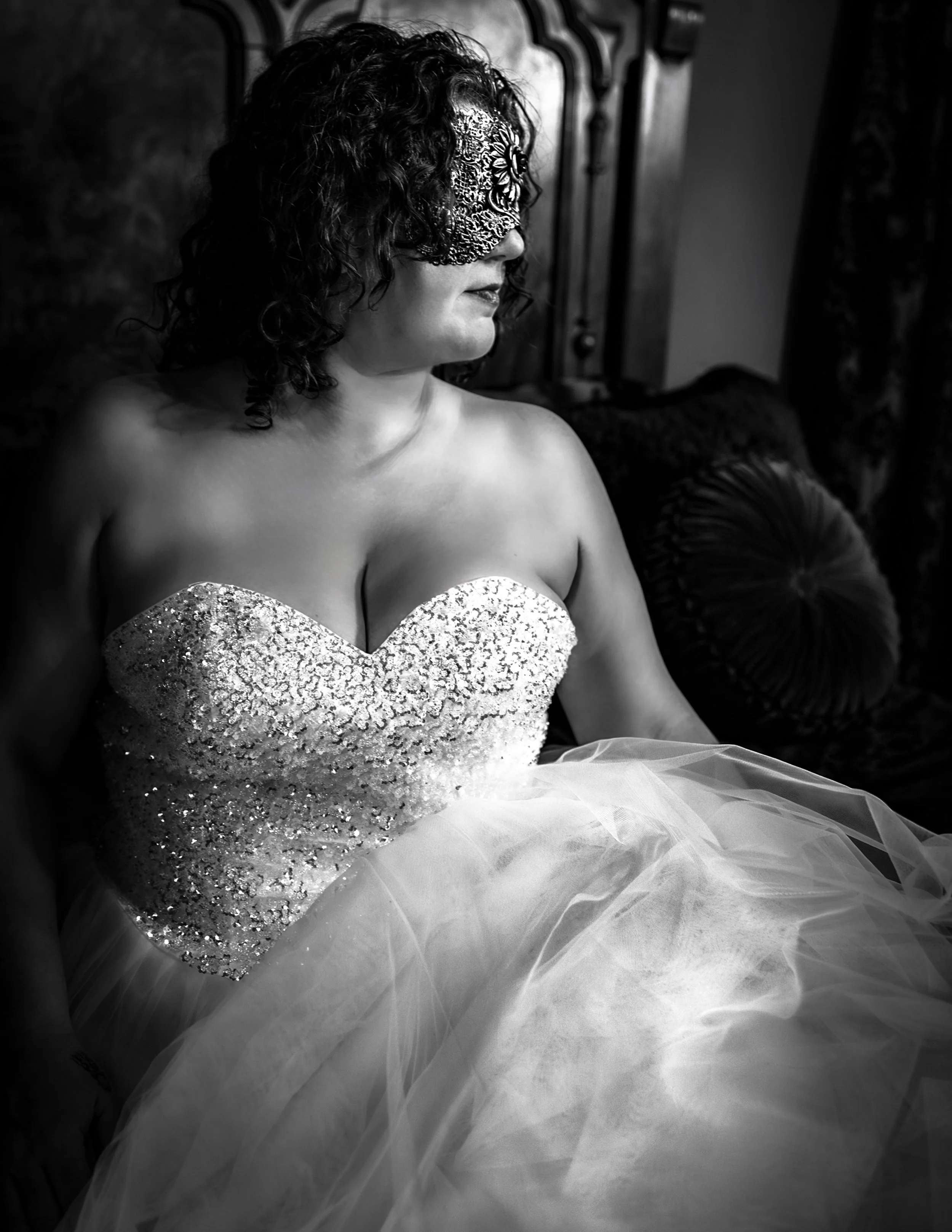
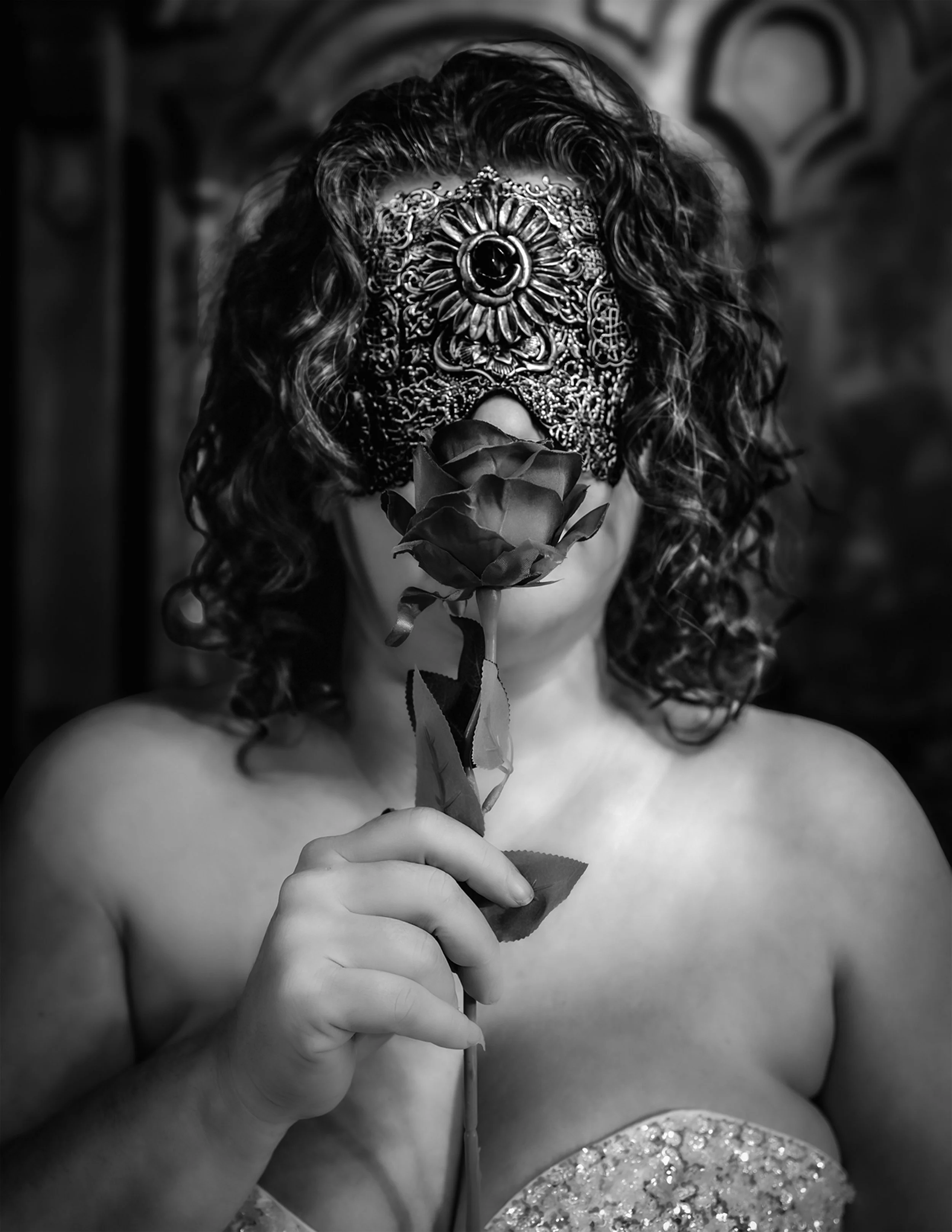
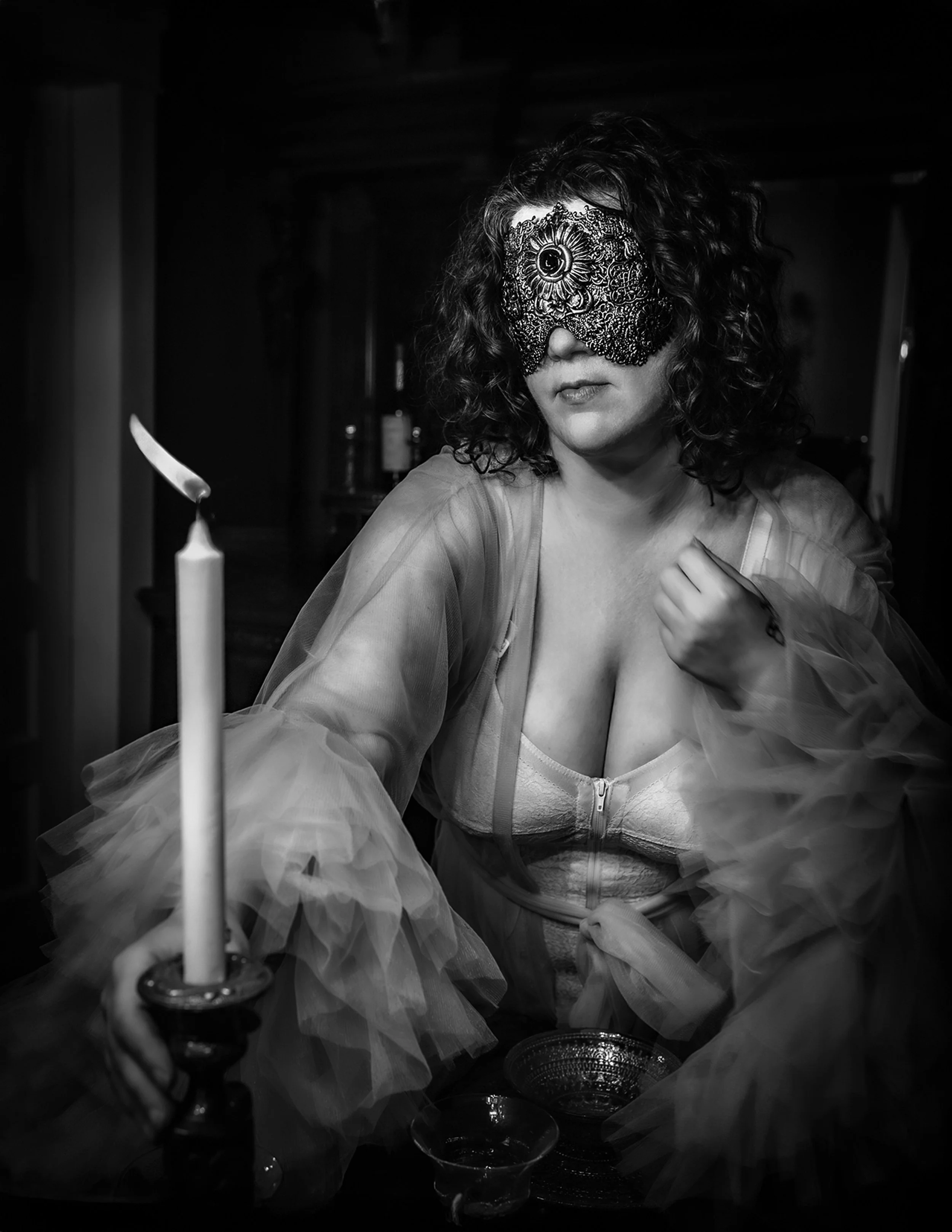
For Days Gone By, the concept was inspired by the mask used in the shoot as well as the wedding gown. We discussed how to bring the idea to life and suddenly realized: what if the shoot was about capturing the isolation and loneliness of abandonment—creating a visual narrative that walks the viewer through the stages of realization the bride experiences before understanding the truth of her abandonment by her would-be groom? In that moment, we knew we had found the right direction.
For landscape photography, the process begins with capturing locations I find beautiful. I hike often, which is how I discover many of the places I photograph.
5. Which project or shoot has been the most meaningful or transformative for you so far, and why?
In November, we experienced a major aurora event here in Ohio, and we were able to see the Northern Lights with the naked eye. I grabbed my camera, set up in 20-degree weather, and shot until I couldn’t feel my fingers. To this day, those images are some of the most magical and memorable of my career. Seeing something so extraordinary this far south was an absolute gift—one I will treasure forever.
6. How do you build trust and connection with your subjects, especially in more intimate or expressive shoots?
The simple answer is authenticity. When I speak with a model—whether it’s our first shoot or we’ve worked together before—I am consistent in who I am. I don’t approach people with a slick sales pitch or empty promises just to secure a shoot. From our first conversation to the final shutter click, I want everyone involved to know exactly who I am. Consistency, to me, is a demonstration of reliability.
7. What role does storytelling play in your photography?
I like to think that before I was a photographer, I was a storyteller. Storytelling sits at the core of the art I create. Every day, the world offers us stories, and as an artist, my goal is to honor that truth. When creating fine art, I want the viewer to feel that the narrative is cohesive, while still leaving enough room for their imagination to fill in the gaps. A little mystery always makes for a good story.
8. What challenges have you faced as a photographer, and how have they shaped your artistic growth?
Initially, learning the technical aspects of photography was a challenge—understanding lighting, posing, and creating visually dynamic compositions. However, the biggest challenge I faced, and still face to some degree, is believing my art is worth being seen. Self-doubt has been difficult to overcome, but as I’ve grown more confident, it has become a tool for honest self-evaluation rather than discouragement.
9. Who or what inspires you—within photography, art, fashion, or beyond?
I am constantly inspired by photojournalists who travel the world telling the stories that need to be seen. When I was a child and first saw The Afghan Girl photograph by Steve McCurry, I was completely transfixed. Beyond its striking visual impact, the story behind her eyes conveyed the desperation of those displaced by war in a way that stayed with me.
10. What advice would you give to emerging photographers looking to develop their voice and stand out in today’s industry?
First and foremost, never stop taking pictures. Shoot whenever you can, explore the styles that resonate with you, and don’t be afraid to evolve. Reinvention and self-reflection are critical to discovering your voice as an artist. When your photographs begin to reflect the emotions you feel in the moment, you’ll know you’re on the right path. Once you understand yourself, the rest will follow.
Conclusion
Jonah Mullins’ photography reminds us that the most powerful images are not always the loudest, but often the most honest. Through a careful balance of light and shadow, emotion and restraint, his work invites viewers into quiet moments of reflection and connection. Whether documenting human vulnerability or the fleeting magic of the natural world, Jonah approaches each image as a story waiting to be told. His journey stands as a testament to the power of authenticity, patience, and the courage to let art speak from a place of truth.
Model: Amanda Snyder
@buckeyechickd
Photographer: Jonah Mullins
@jonah_mullins_photography