

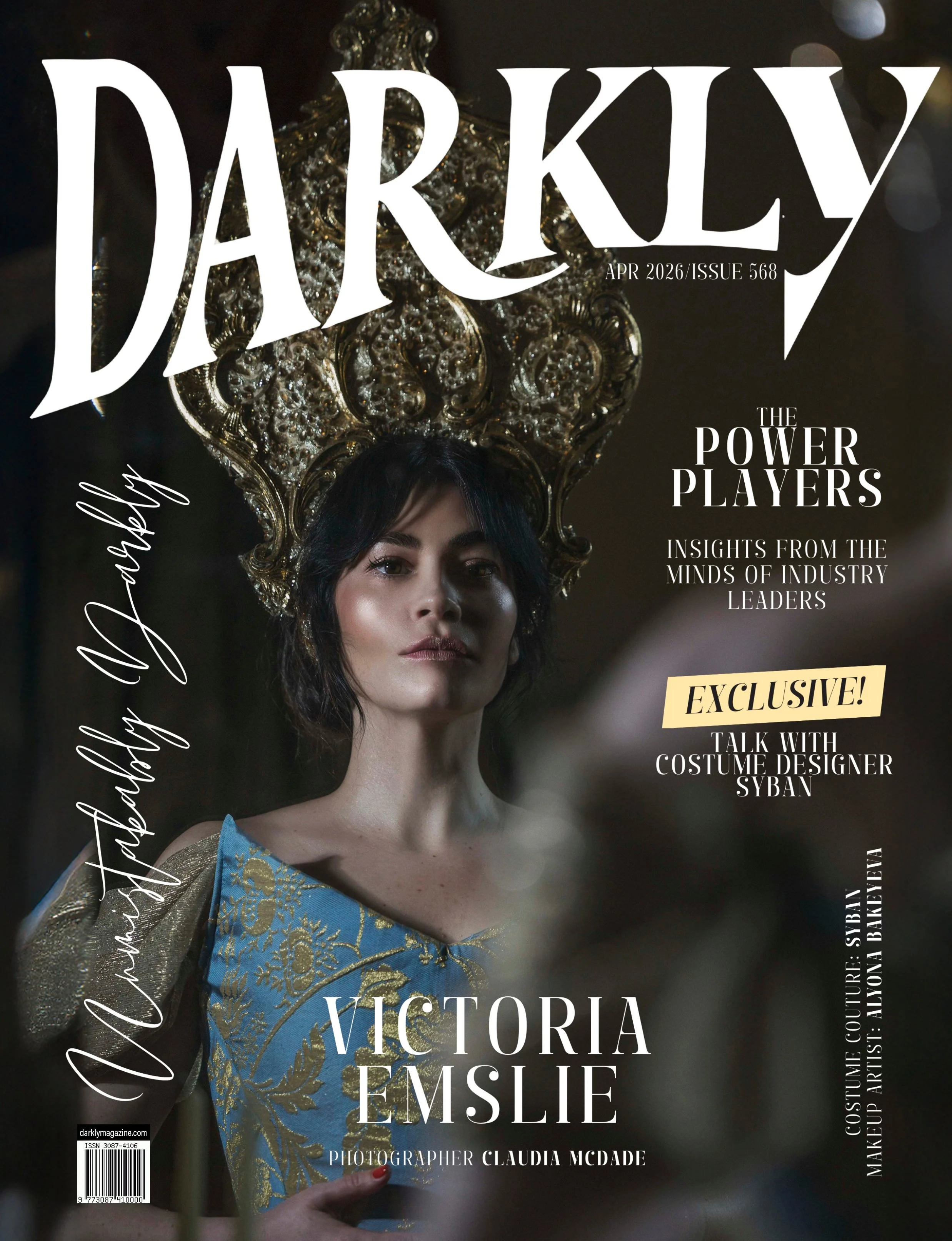
Syban Interview
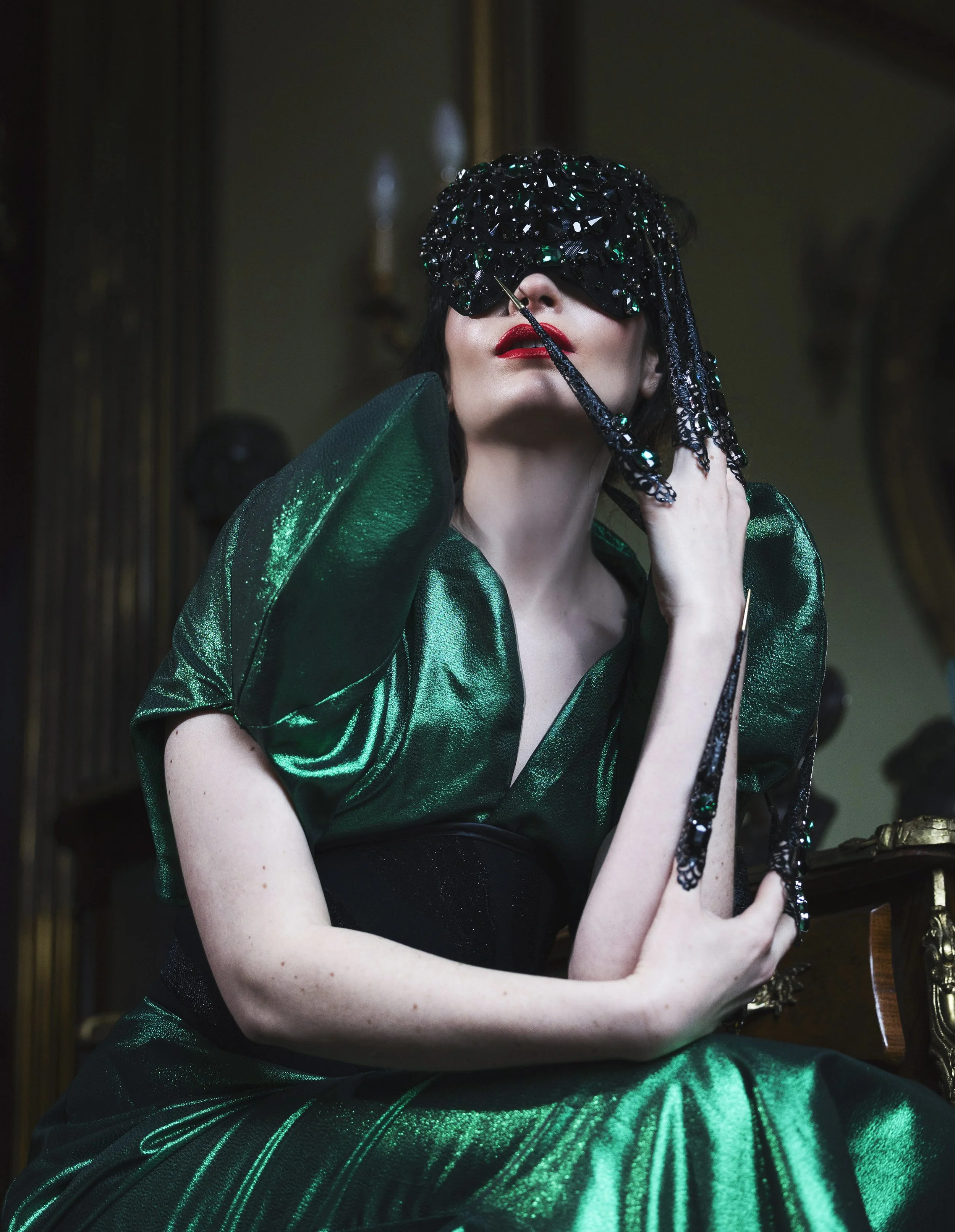
Syban, founder of SYBAN, is a costume designer and performance artist whose work exists at the intersection of couture, fantasy, and cinematic transformation. With training in couture in Belgravia, studies in costume at London College of Fashion, and a master’s focus on womenswear and Japanese culture at Bunka in Tokyo, she has developed a distinctive creative language rooted in craftsmanship, ornamentation, and otherworldly storytelling. Working across costume, set design, performance, and private commissions, Syban creates intricate wearable art using leather, lace, plastics, metallics, corsetry, beadwork, and complex structures to transform the body into something powerful, surreal, and unforgettable.
Syban Interview
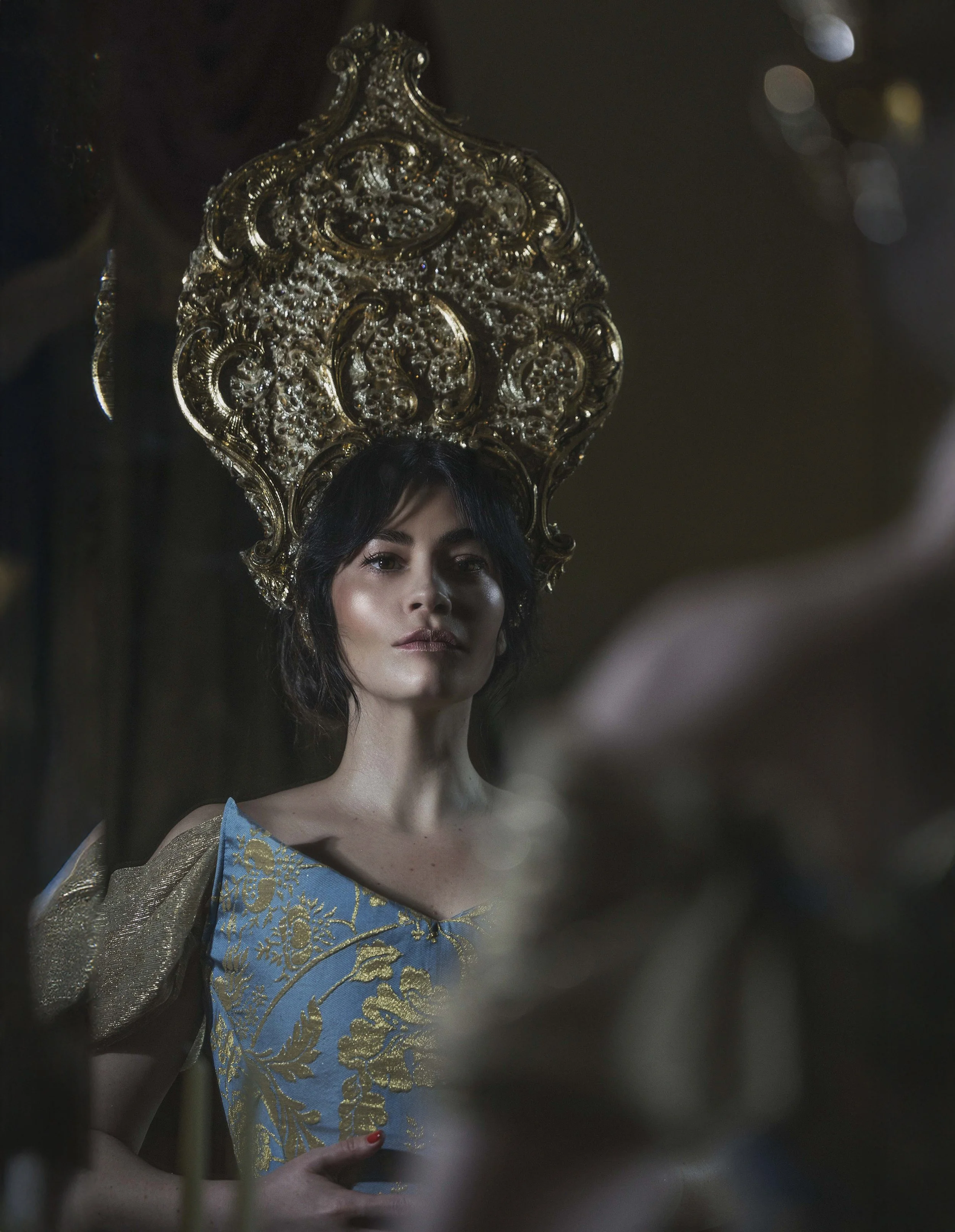
Explore dark glamour and avant garde fashion through striking photography, editorials, and exclusive interviews at Darkly. Embrace the beauty in shadows.
In the world of costume design, few creatives possess the ability to transform fabric, crystal, and embellishment into something truly mythic. Syban is one of those rare visionaries. With a design language shaped by opulence, symbolism, and cinematic imagination, her work exists at the breathtaking intersection of couture craftsmanship and otherworldly storytelling. Drawing inspiration from religion, mythology, transformation, and the tension between darkness and light, she creates wearable art that feels both powerful and transcendent. In this interview, Syban opens the doors to her richly layered creative universe, sharing the origins of her passion, the emotional and symbolic threads woven through her work, and the extraordinary vision that continues to define her as a singular force in costume design.
1. Can you tell us how your journey into costume design first began?
My journey into costume design began when my mother showed me Bram Stoker’s Dracula when I was about ten years old. I was completely captivated, it’s an incredible film with breathtaking costume design. Then, when I was 13, I came across The Cell on television late one night. I later discovered that both films featured costume design by Eiko Ishioka, and her work deeply and permanently imprinted on me. In that moment, I knew this was what I wanted to do: create extraordinary, wearable works of art that captivate and move people.
When I was 17, I secured an internship at a couture house in Belgravia, London, where I learned the fundamentals of couture construction and tailoring. That experience solidified my passion and everything grew from there.
2. How would you describe your design aesthetic and creative identity?
My design aesthetic is otherworldly and opulent, rooted in excess, ornamentation, and transformation. I’m drawn to the visual language of religion and mythology, where symbolism, ritual, and grandeur collide. My work is heavily embellished, richly textured, and designed to catch and reflect light, it is glittering, luminous, and lustrous from every angle.
I create from an obscenely lavish place: more is more, and then more again. Layers of crystals, beads, and intricate detailing build pieces that feel immersive and alive. Nothing is ever quite enough, and that sense of abundance is at the heart of my creative identity.
3. What inspires you most when creating a new collection?
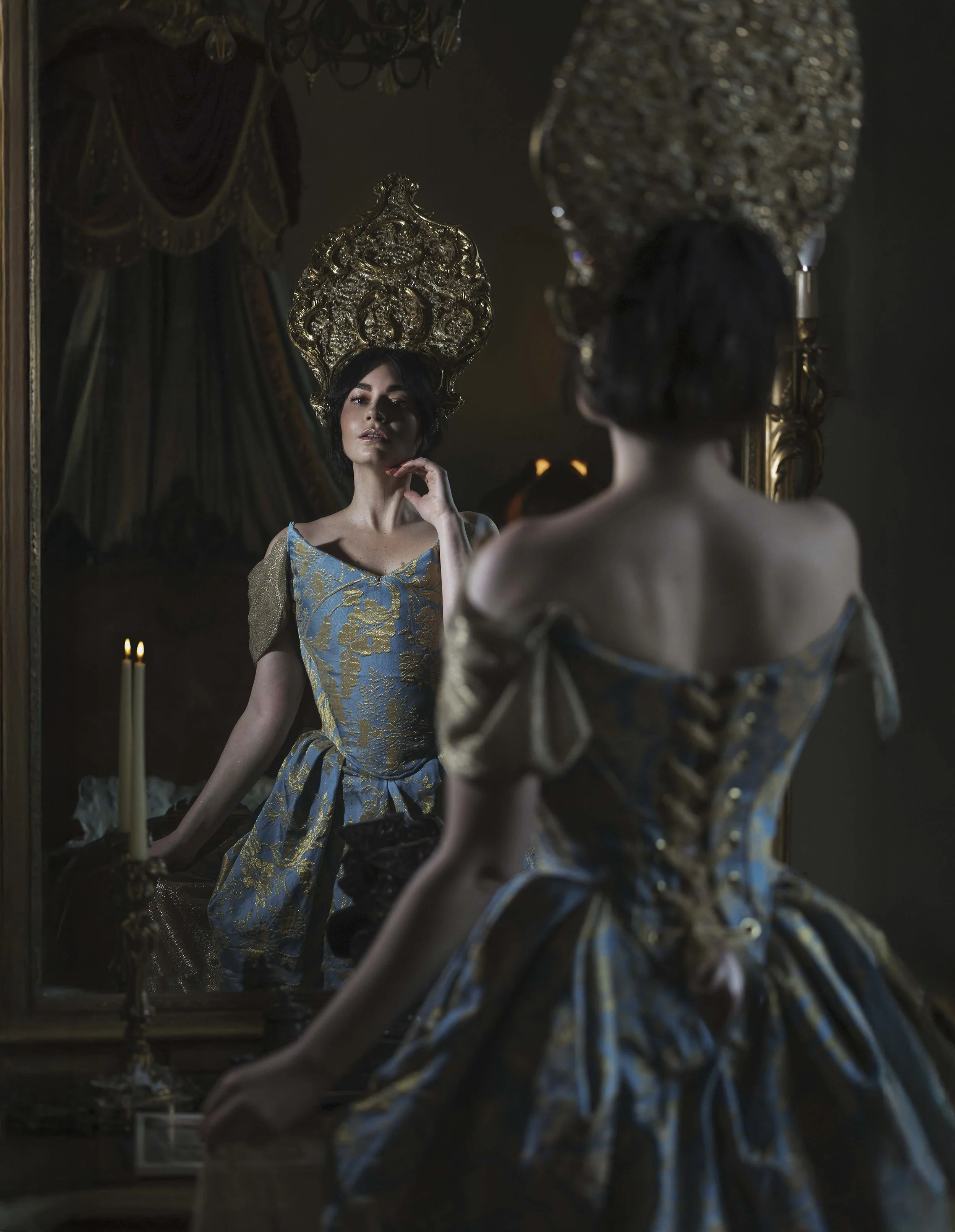
My work as a costume designer is rooted in character creation. Rather than building a single collection around one theme, I create distinct figures that inhabit a dreamlike, cinematic universe, each piece acting as a chapter within a larger, evolving narrative.
My practice centres on making wearable art that renders the surreal corporeal, forging a bridge between the ethereal and the handmade language of couture. I create intricate, extravagant pieces that transform the wearer into powerful, otherworldly beings.
This act of transformation, this alchemy, is what inspires me. I am drawn to the space where the brutal meets the beautiful, where opulence borders on the obscene. That tension is where my work lives.
There is a universe within me that breathes through contrast and contradiction. My creations are born from these internal worlds and their conceptual stories—each one exploring the struggle between darkness and light, and bringing complex, imagined characters to life.
4. Can you walk us through your creative process from concept to final piece?
My process begins from a materials starting point. I work within a defined colour palette; black, silver, white, gold, and red, and I’m instinctively drawn to texture and ornamentation within those tones. I collect them, get inspired by them and use them much like a painter uses paint.
Travel plays a big role in how I gather inspiration. I collect objects, surfaces, and tactile references from different places, and through my work in film, television, and events, fabrics often find their way to me organically. Over time, this has created a kind of magnetic ecosystem where materials align naturally with my aesthetic, which I feel incredibly grateful for.
I’m particularly drawn to working monochromatically, layering as many textures as possible within a single colour to create depth and complexity. From there, I begin thinking three-dimensionally—considering how the piece will exist as wearable art, and what kind of space or world it will inhabit.
I then draw on the visual language of my existing body of work—identifying the signature elements that define my practice—and explore how to evolve them into something new, something that feels both cohesive and unexpected.
From that point, the piece is brought to life through an intense and meticulous making process, with an obsessive attention to detail. Every element is considered, refined, and crafted to ensure the final work feels powerful, immersive, and complete.
5. Are there any particular themes, emotions, or stories you like to express through your designs?
I believe all art is, in some way, autobiographical. We each carry our own truths, personal reflections of our histories, our dreams, our hopes, and our fears, and art becomes a vehicle allowing us to give form to those inner worlds.
My work is deeply informed by my heritage. I am half Italian, half Venezuelan, and Jewish, and my upbringing was shaped by a complex relationship with religion. My father’s family were very strict Roman Catholics and strongly opposed my connection to, and identification with, my Jewish heritage. This led to a period of intense religious pressure and trauma, which has left a lasting imprint on my creative language.
That influence is visible in my use of gold, ornamentation, and my reinterpretation of religious iconography. It also manifests in recurring themes of duality, heaven and hell, light and darkness, which run as a continuous thread throughout my work.
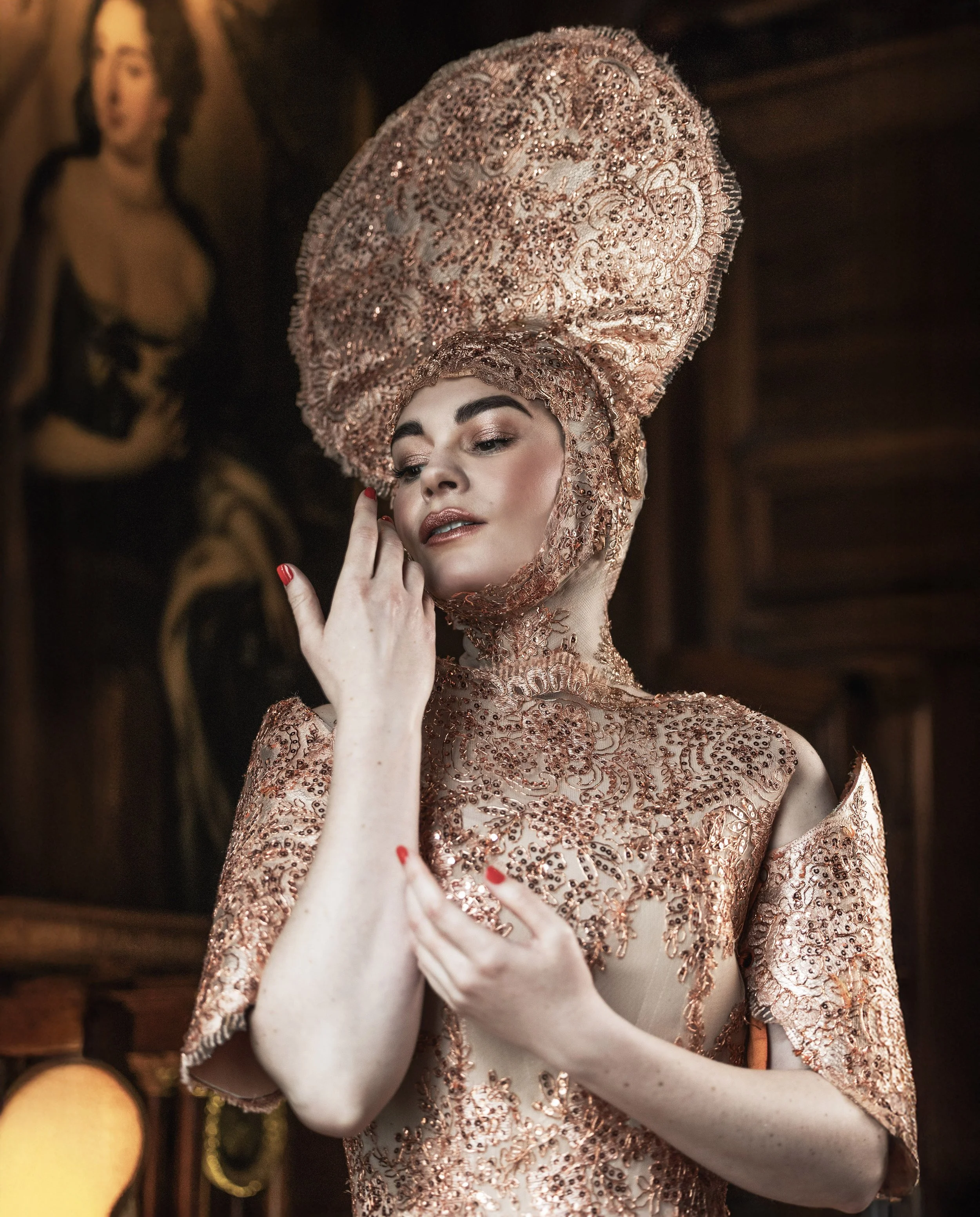
Another central theme in my practice is alchemy. Through the use of texture, metallics, and embellishment, I aim to transform the wearer into powerful, divine figures: Goddesses, Queens, mythological beautiful beasts, beings that embody strength, complexity, and transcendence.
Ultimately, my work exists to express the dynamic space between opposing forces—heaven and hell, light and dark, magic and mysticism—exploring tension, transformation, and the beauty that can emerge from both.
6. How do you balance artistic vision with wearability and functionality?
As I work in the realm of costume, the wearability aspect is one of the main parameters. As the pieces travel the world, their durability and functionality are of the utmost importance. I find by having these unviolable boundaries, it actually helps creativity flow. If it cannot be moved in properly, it cannot come alive. Durability, functionality, and artistic vision are the three pillars that must co-exist. It is like a three-legged stool, remove one and the whole thing comes tumbling.
7. What challenges have you faced as a costume designer, and how have they shaped your work?
Do you mean this from an emotional point of view or a practical one?
8. Is there a collection or design you are especially proud of, and why?
Every new piece becomes my favourite piece, as it is the evolution of everything that came before. Work that I am proud of is when I’ve worked on huge tours like Sabrina Carpenter’s UK tour, where I worked heavily on all the crystal embellishments. Being able to do that high-end embellishment and then having it seen by millions is always pleasing. I also designed and had my brand create the costume for Chappell Roan’s band on their last UK tour. Again, making something beautiful but also very practical that then gets seen by thousands and thousands is very gratifying. This kind of work also always has to be created very quickly and to a very high standard, and when you pull that off it is truly glorious.
One of my favourite designs was an incredibly embellished gold piece I designed and made that got worn by the lovely Chinese pop star Xin Liu for her Coachella show. I never got to meet her to take my own measurements or discuss exactly what the choreography was going to be, and created the piece with zero fittings, but somehow it fit her perfectly and on that stage it looked incredible. That’s when you know your design concepts translate to the big stages and that your craftsmanship knowledge can stand the test and work under any situation.
I have also been heavily inspired by the movie The Cell, particularly a scene in the Namibian desert. I had the wild idea to take some of my costumes and one of my best friends to Africa, fly to Namibia, then hire a truck to drive into the desert with a huge backpack of costumes and hike to the exact spot where it was filmed 20 years ago. In that killer summer heat, driving in the dark to get to the spot just for sunrise, wearing my pieces and performing in them whilst we filmed, was truly such a full-circle moment. And also slightly insane, but fortune favours the brave, and I was very proud that my passion managed to pull that project off.
9. How do you see costume evolving, and where do you see your work fitting into that future?
As AI and technology continue to evolve, costume will increasingly expand into digital spaces. Wearable design won’t exist solely in the physical world, there will be a growing demand for pieces that live across virtual environments, gaming, and immersive media.
This is something I’ve already begun exploring by having my work 3D scanned, allowing my pieces to exist within digital landscapes as well as physical ones. I’m especially excited by the potential for collaboration in this space, particularly with 3D artists, as it opens up entirely new ways of building worlds and characters.
That said, I believe there will always be a deep and ongoing need for real craftsmanship. The tactile, handmade quality of costume, especially for screen and stage, can never be fully replaced. It brings a level of depth, authenticity, and presence that is essential to performance.
I see my work existing in both of these worlds: bridging physical couture and digital creation, while continuing to champion the artistry of handcraft.
10. What would you like people to feel when they wear your designs?
Powerful, like Gods and Goddesses, eternal and beautiful and extraordinary and truly one of a kind. Wrapped in a beautiful dream that makes them feel electrically awake and alive.
Syban’s work is more than costume design, it is alchemy in motion. Through lavish embellishment, emotional depth, and an uncompromising devotion to transformation, she creates pieces that do not simply dress the body, but elevate it into something divine, cinematic, and unforgettable. Her ability to merge wearability, durability, and fantasy with such precision speaks to both her technical mastery and artistic power. As costume continues to evolve across physical and digital worlds, Syban stands as a designer whose vision feels timeless yet entirely future-facing. Her creations shimmer with beauty, but beneath the surface lies something even more compelling: a deeply personal language of strength, duality, and becoming.
Photo: @cmcdade
Fashion: @sybansyban
MUA: @alyona.artistry
Model: @monhublot