

Georgia Chioni - SKiN iT FASHION
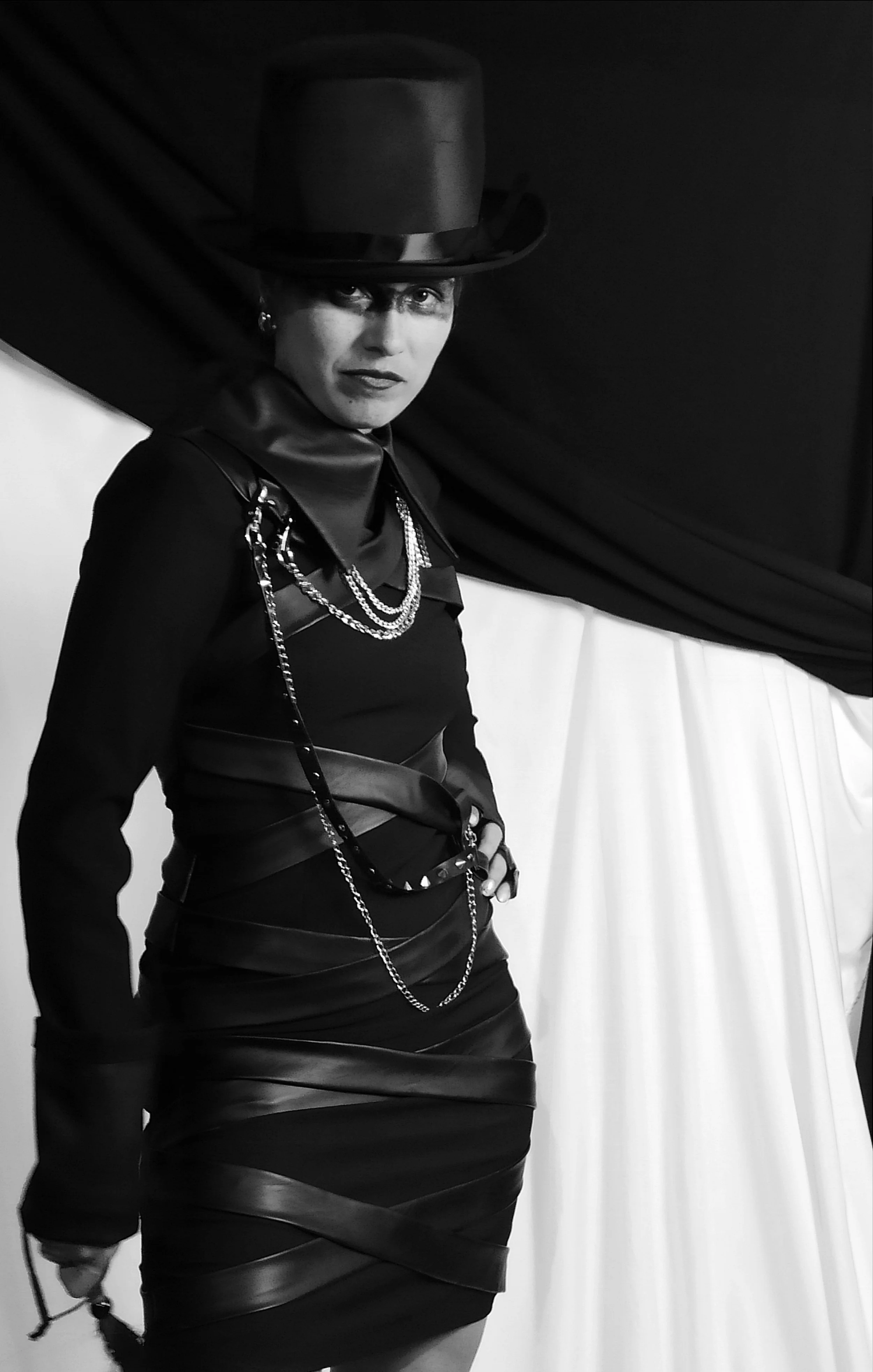
Georgia Chioni, the mind behind SKiN iT FASHION, belongs to a rare generation of designers who do not simply create clothing, but build entire conceptual worlds around it. Her work exists at the crossroads of fashion, philosophy, narrative, and cultural inquiry, transforming garments into expressions of identity, tension, and resistance. Influenced by her studies across Greece, Italy, and Germany, Georgia has developed a singular visual and intellectual language, one that challenges conventional ideals of beauty through the evocative idea of the Anti-Muse. With an approach rooted in craftsmanship, slow fashion, and critical thought, she invites us into a universe where style becomes substance and fashion becomes a powerful form of dialogue.
1. Can you take us back to the beginning of your path in fashion and the moment you knew design would become your language?
My relationship to fashion began less as a career decision and more as a necessity to translate how I perceive the world. I have always been fascinated by the body as a moving architecture and clothing as a second skin that carries meaning. At some point I realized design was not simply about garments, but about constructing narratives and questioning systems. In addition, given my background as cinematographer and author, I became interested in creating fictional environments where garments would function like characters themselves — extensions of narrative worlds that could belong equally to film, literature, or the runway. This approach echoes the idea of Gilles Deleuze, who suggested that art creates “blocks of sensation” capable of generating new realities and perceptions.
Coupling with my theoretical studies on fashion, law and sociology, I combined theories of system governance and autopoiesis that led me to approach fashion not simply as an aesthetic field, but as a self-producing cultural system. All this culminated in creating the idea of the Anti-Muse. Instead of celebrating the traditional muse as an idealized figure, I became interested in the presences that disrupt ideals — those who reveal the fractures of the system itself. In a way, the Anti-Muse embodies the spirit of Michel Foucault’s observation that “where there is power, there is resistance.” Fashion, to me, became a language through which these tensions could be expressed, a space where garments operate as both aesthetic objects and subtle acts of critique, revealing how identity, beauty, and power are constantly negotiated.
2. Having studied in Greece, Italy, and Germany, how have these different creative environments influenced your aesthetic and way of thinking?
Each place shaped a different layer of my thinking. Greece gave me a deep awareness of history, symbolism, and the human body as a sculptural form. Italy introduced me to the discipline of craft and the sensuality of materials. Germany, on the other hand, encouraged conceptual rigor and systemic thinking. Through all this, I would say that I learnt to approach fashion almost as a cultural investigation, with a more analytical way of understanding it as a system that can be questioned, interrupted, and reimagined. Each environment had so many different things to offer, a plethora of challenges to the way fashion is perceived: a societal mirror and an echo reflecting desire.
3. Your brand has earned awards and international recognition. How have these milestones shaped your confidence and direction as a designer?
Recognition is meaningful not simply as validation, but as a signal that ideas resonate beyond our immediate environment. For me, these milestones reinforced the importance of continuing to experiment and to challenge the structures of the fashion system. So rather than pushing me toward conformity, they encouraged me to deepen my conceptual approach and to remain faithful to the idea that fashion can operate critically as well as aesthetically. I am very grateful for all awards that actually showed me the depth and the multidimensionality of fashion in society.
4. How would you define the essence of your brand today, and what makes it distinct in the world of contemporary fashion?
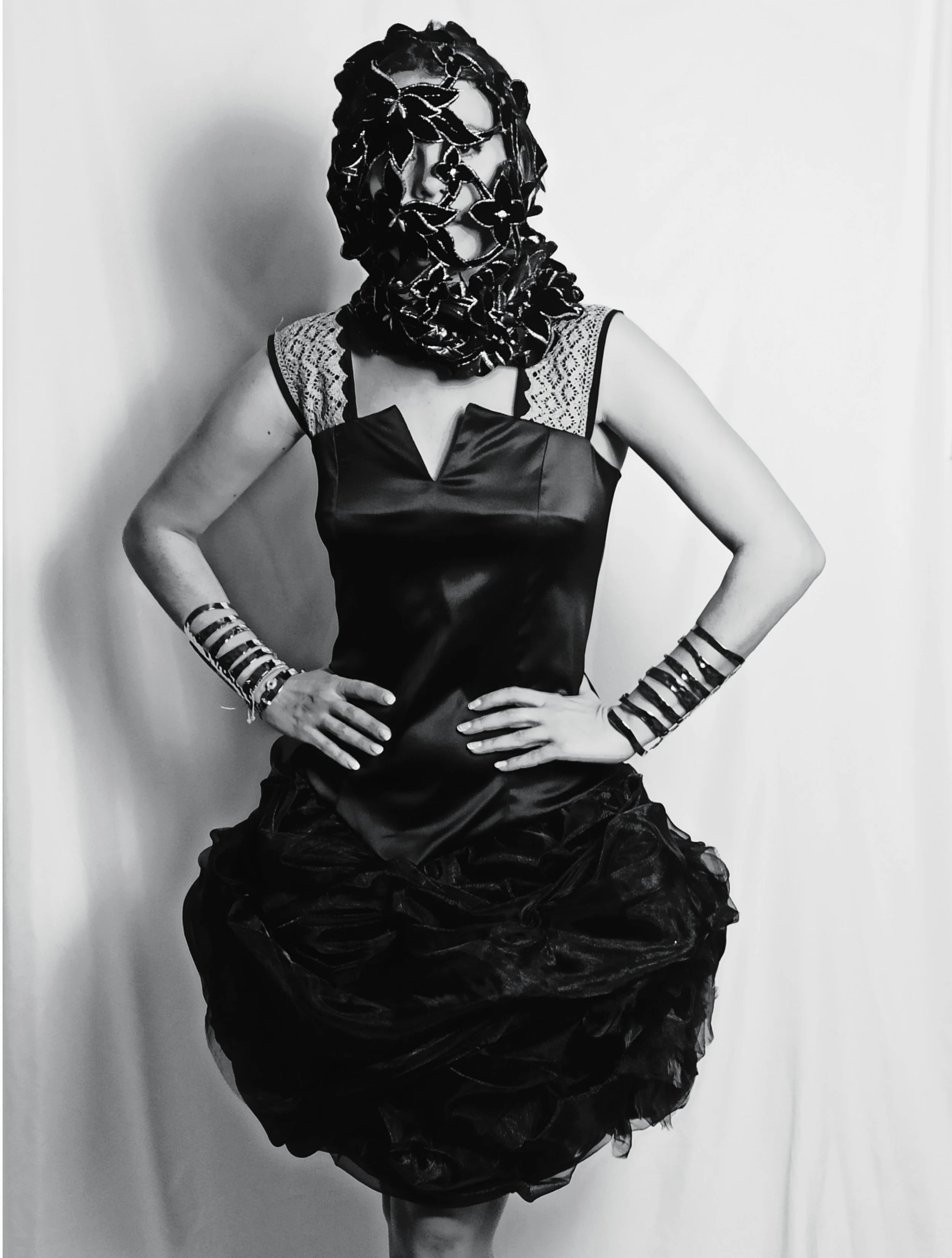
The essence of the brand lies in exploring the relationship between skin, identity, and system. Clothing becomes a locus where personal narratives meet broader cultural frameworks. In this concept, the thematic of the Anti-Muse, that runs through my collections, is crucial: figures that represent a breach in the dominant narrative of fashion. Instead of presenting an ideal of perfection, the collections explore tension, vulnerability, and transformation. The Anti-Muse is not a rejection of beauty, but a reconsideration of it. In this context, garments function almost like membranes between the body and the social system that surrounds it. They both protect and reveal, creating a dynamic interface between individuality and collective structures. Fashion becomes almost a boundary, where knowledge, existence and power interact, a living surface where identity and power continuously unfold. To this end, perfection becomes a myth and tension the truth of beauty.
5. Your collections have appeared in international fashion weeks and catwalk presentations. What does the runway allow you to express that other formats do not?
The runway allows fashion to become a living narrative. It is not only about garments, but about movement, sound, rhythm and presence. Fashion is not simply worn — it is inhabited, negotiated, resisted. In addition, the runway is a space of conceptual expression a moment where bodies, garments, and atmosphere form a temporary system that invites the audience to rethink familiar codes of beauty and identity. This is apparent in all my thematic collections: SKiNNERS, Oblivion and the Phoenix, Welcome to Dieselland, Wonderland I etc.
6. Slow fashion is deeply rooted in your philosophy. What inspired you to embrace a more intentional and conscious approach to design?
I grew up in an environment of domestic circular economy model, where nothing was wasted and clothes lasted for a lifetime. Great-grandmother and grandmother taught us respect for materials, for labor, and for the quiet value of longevity, that is respect the life of objects — their materials, their making, and the stories they carry through time. So, in this way, garments are not disposable things. Rather, I would say, companions. In this context, slow fashion emerged naturally from my desire to create work with depth and longevity as a way of life. The fashion system often operates through acceleration and constant replacement, but I became interested in the opposite: durability, reflection, and emotional connection. Garments that evolve with the wearer over time.
7. How do you weave sustainability into your creative process while maintaining the refinement and strong identity of your work?
For me, sustainability is not only a technical or material decision; it is a way of thinking. It begins with questioning why we create. By focusing on craftsmanship, thoughtful construction, and long-lasting materials, sustainability becomes embedded in the identity of the work rather than applied as an external label. To be more concrete, I focus a lot of applying zero patter techniques, deadstock, doing upcycling work and cooperating with local fabric suppliers to get unused fabrics. In addition, I respect a lot the ethical part of fashion in all my collaborations.
8. From your perspective, how can fashion evolve into a more thoughtful and responsible industry without losing its sense of beauty and desire?
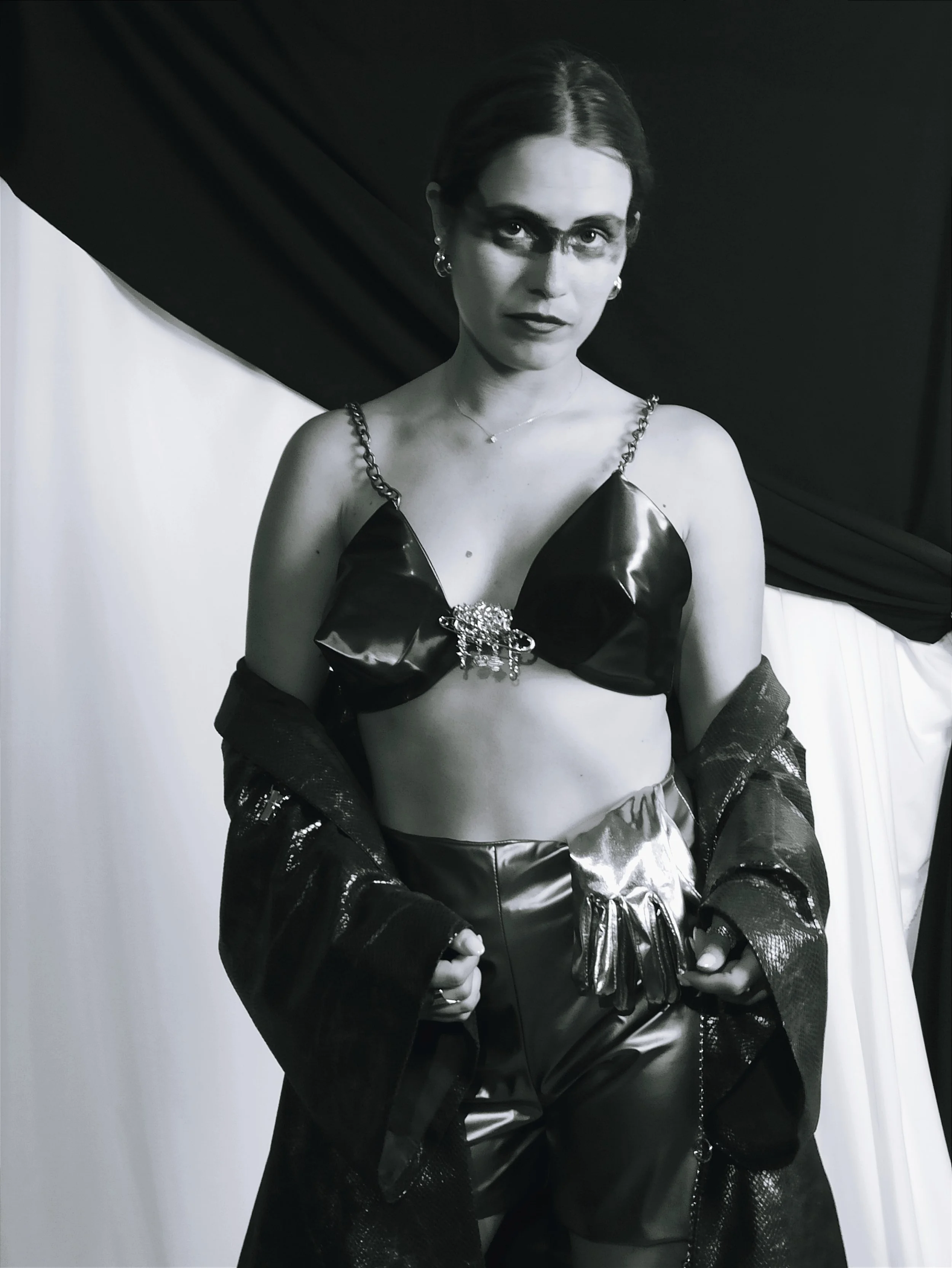
Fashion has always been a space of imagination and desire. The challenge is not to remove that, but to redirect it. Desire can be connected to meaning, to craftsmanship, to stories that resonate deeply. If the industry begins to value cultural and emotional depth as much as novelty, fashion can remain seductive, while becoming more responsible. Actually, I would say that fashion should not eliminate desire — it should give desire meaning. True luxury is time, craft, and narrative.
9. What emotions, presence, or story do you hope your designs awaken in the people who wear them?
In a way, the wearer becomes an Anti-Muse themselves — someone who subtly disrupts expectations and carries a quiet narrative of individuality. Uniqueness, sensuality, dynamism. Clothing is where the body negotiates its place in the world and fashion is a living interface between individuality and structure.
10. As you look to the future, what vision do you hold for your brand and the legacy you hope to build through your work?
Looking forward, I see the brand evolving as both a design practice and a conceptual platform. I want it to remain a space where fashion intersects with philosophy, art, and cultural critique. The legacy I hope to leave is the idea that fashion can operate not only as decoration but as a thoughtful system of expression, where garments become tools for questioning and reimagining how we relate to our bodies and to the structures around us. Garments are the epidermal architectures of our identity.
Georgia Chioni’s vision reveals fashion as far more than adornment — it becomes a space of thought, emotion, and quiet rebellion. Through SKiN iT FASHION, she has built a universe where craftsmanship, philosophy, and artistic depth coexist with beauty and desire, creating work that feels both intellectually rich and visually arresting. Her approach challenges convention while preserving elegance, proving that fashion still has the power to question, transform, and endure. As her journey continues, she stands not only as a designer of garments, but as a creator of ideas, shaping a legacy that is as conceptually powerful as it is beautifully expressed.
Model: Danai Maria Chatzithoma @danaimarichatz
Creative Director/Photographer: Georgia Chioni @georgia_chioni
Lighting Designer: Teo K. @cinnamonbird
Retoucher: Konstantinos Christopher Nolan @konstantinosnolan
Fashion Designer: SKiN iT Fashion @skin_it_fashion