

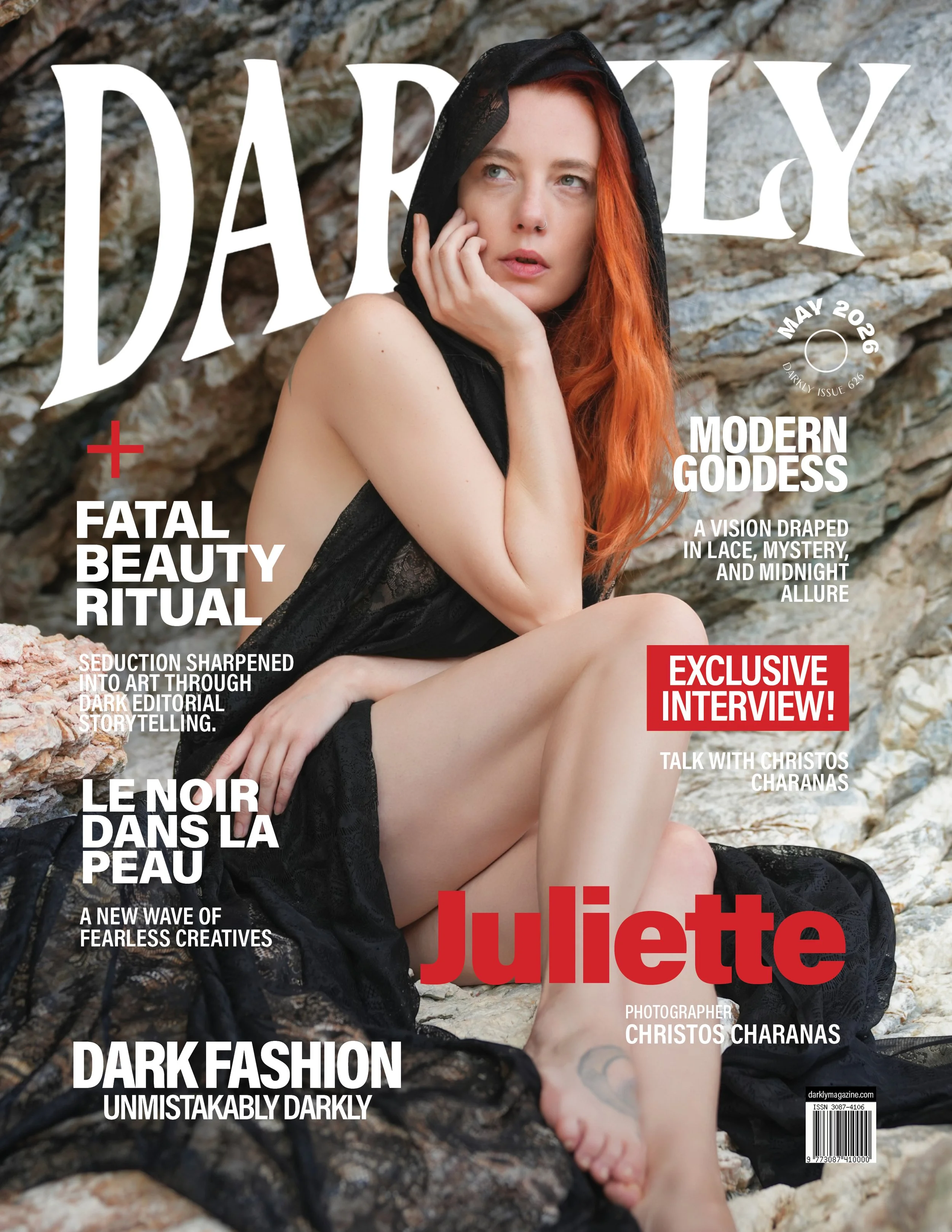
Christos Charanas
Christos Charanas’ journey into photography is as unique as the images he creates. Before stepping into the world of portraiture and editorial photography, he spent years observing landscapes, horizons, silence, and atmosphere through his camera — all while building a life at sea as a Mariner Captain. Without formal photography seminars or prior knowledge, his path began through instinct, curiosity, and a deep emotional connection to the world around him.
Only two and a half years ago, Christos photographed a person for the first time, opening a new chapter in his creative life. Since then, his work has evolved into something cinematic, emotional, and deeply atmospheric. For him, photography is not simply a profession or a skill — it is passion, love, and a way of understanding people, places, and unspoken stories. In this interview, Christos shares his creative journey, his inspirations, and the emotional vision behind his growing photographic world.
Interview
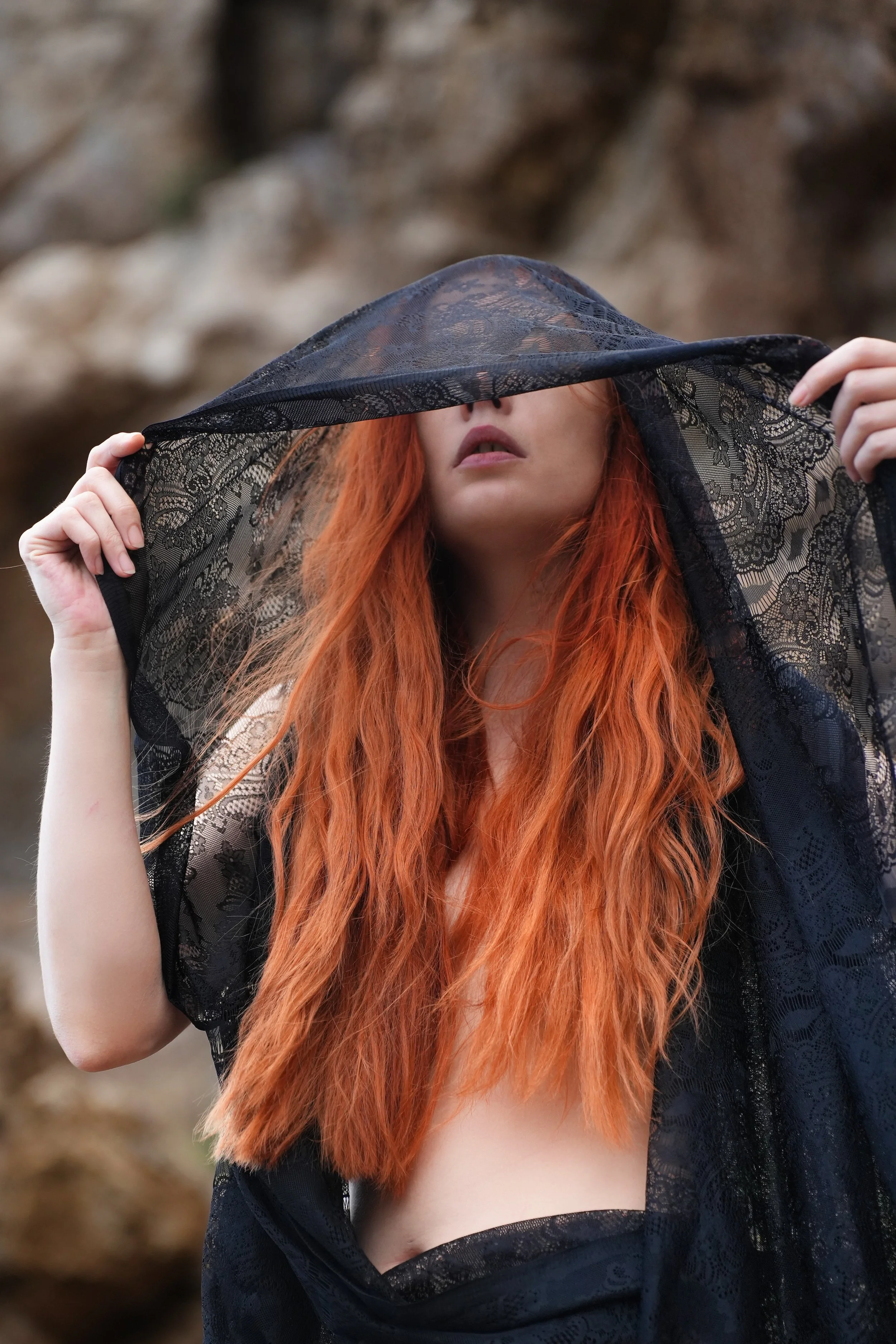
Christos Charanas’ journey into photography is as unique as the images he creates. Before stepping into the world of portraiture and editorial photography, he spent years observing landscapes, horizons, silence, and atmosphere through his camera — all while building a life at sea as a Mariner Captain. Without formal photography seminars or prior knowledge, his path began through instinct, curiosity, and a deep emotional connection to the world around him.
Only two and a half years ago, Christos photographed a person for the first time, opening a new chapter in his creative life. Since then, his work has evolved into something cinematic, emotional, and deeply atmospheric. For him, photography is not simply a profession or a skill — it is passion, love, and a way of understanding people, places, and unspoken stories. In this interview, Christos shares his creative journey, his inspirations, and the emotional vision behind his growing photographic world.
1. How did your journey into photography begin, and what first inspired you to pick up a camera?
Photography started as a way to observe the world more deeply. Working for years at sea, surrounded by isolation, changing horizons, and long periods away from home, I became more aware of silence, emotion, and the stories people carry without speaking. Picking up a camera felt natural, almost like collecting moments that would otherwise disappear.
I began around five years ago, without any formal photography knowledge or seminars, photographing landscapes and learning through observation, instinct, and passion. Only two and a half years ago, I had my first photoshoot with a person, which opened a completely new world for me creatively.
What began as curiosity slowly became a need to create images that feel honest, atmospheric, and emotionally charged. My main profession is Mariner Captain, but photography is my passion and my love. In many ways, I feel I live between both worlds.
2. How would you describe your artistic style and the atmosphere you aim to create in your work?
I would describe my style as cinematic, emotional, and slightly dark. I am drawn to images that feel quiet but intense at the same time.
I often search for a balance between vulnerability and strength. Whether I photograph fashion, portraits, or conceptual work, I want the viewer to feel something before understanding the image intellectually.
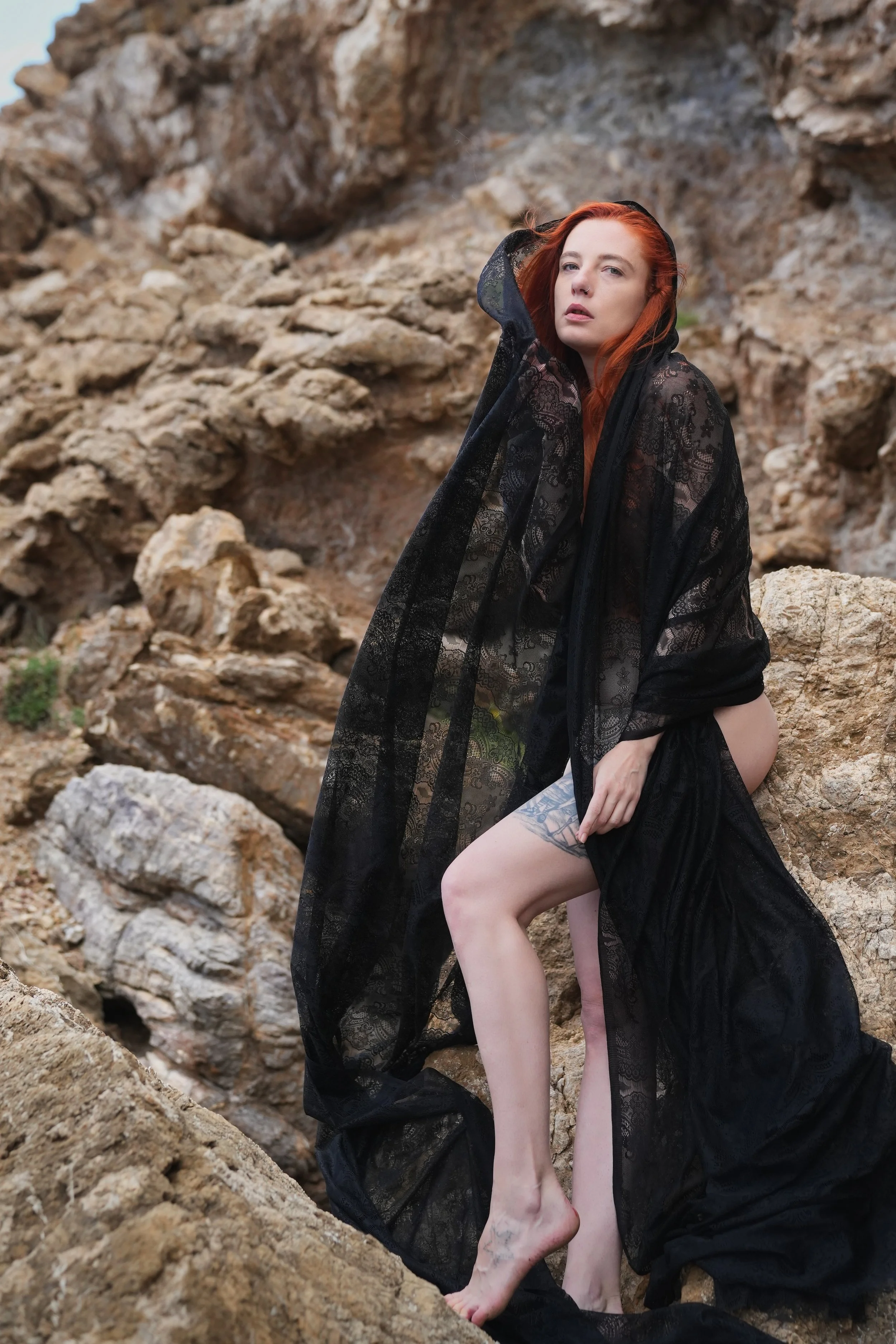
Atmosphere is very important to me — mystery, tension, softness, nostalgia, and sometimes discomfort.
3. What inspires you the most when developing concepts for your editorials or photo series?
Inspiration usually comes from emotions rather than trends. Memory, loneliness, mythology, nature, human desire, identity, and personal experiences often become the starting point.
Living between the sea and places like Samothrace, Greece, has also influenced how I see isolation, freedom, and transformation.
Sometimes a project starts with a single feeling, and the visual world builds around it.
4. Do you prefer working with natural emotion and spontaneity, or carefully planned visual storytelling?
I think the strongest work exists somewhere between both.
I usually build a concept, mood, or emotional direction before the shoot, but I leave space for spontaneity. Unexpected expressions, movement, or silence often become the most powerful moments.
I don’t want people to simply pose. I want them to exist within the image.
5. How important are fashion, styling, and location in shaping the final mood of your images?
They are essential.
Styling, textures, jewelry, fabric, makeup, and location all contribute to storytelling. Even small details can completely change the emotional weight of an image.
However, I believe atmosphere comes first. Beautiful styling without emotion rarely stays memorable.
6. What has been one of your most memorable or challenging photoshoots so far, and why?
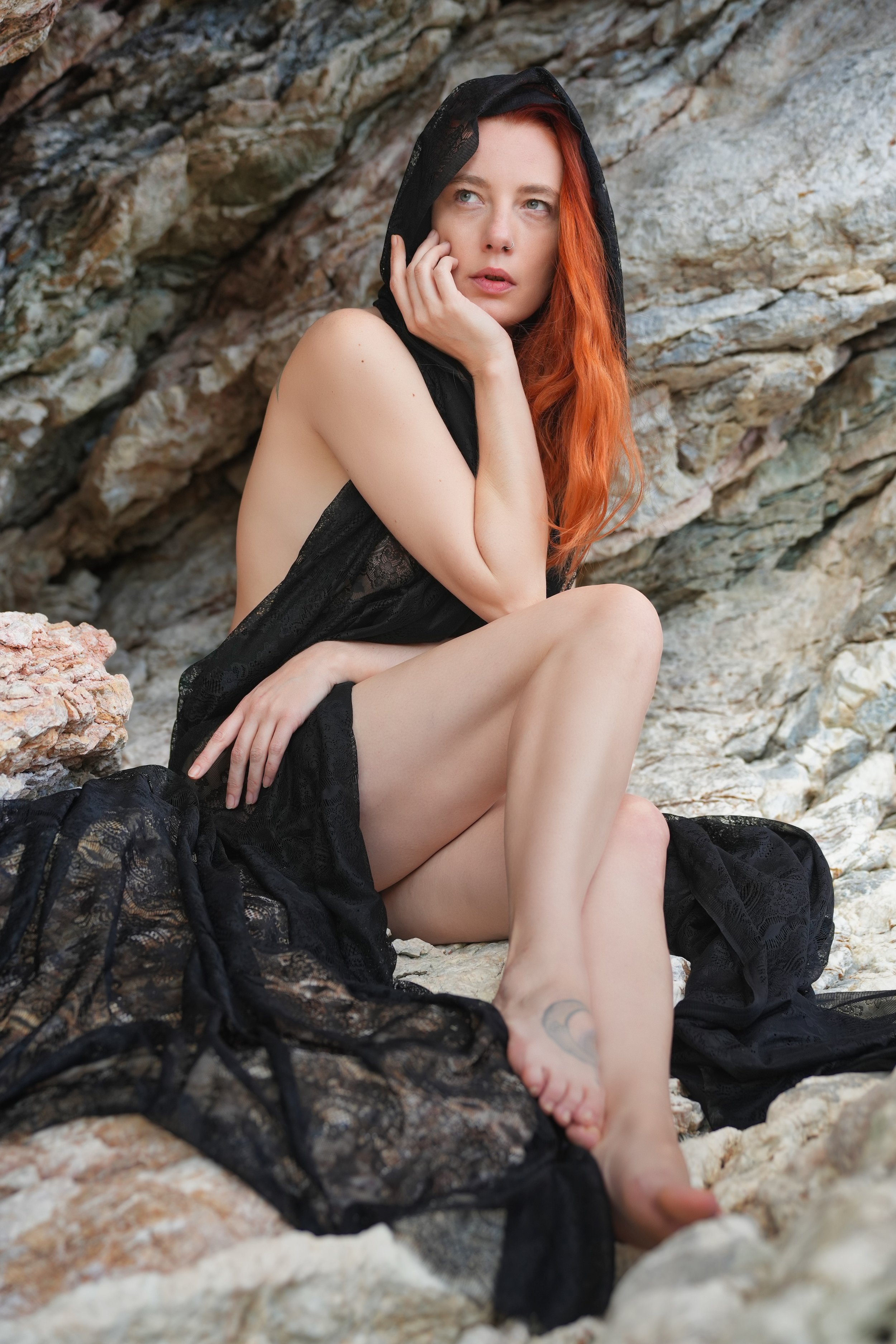
Some of the most challenging shoots were not technically difficult but emotionally demanding — projects where trust, vulnerability, or strong concepts were involved.
I remember realizing that photography is often less about equipment and more about creating an environment where people feel safe enough to reveal something real.
Those moments stay with me longer than perfect lighting setups.
7. How do you build trust and connection with models or creative teams during a shoot?
I try to create calmness.
I speak openly, listen, avoid pressure, and treat collaboration as something shared rather than directed. Trust usually appears when people stop feeling judged.
The best images often happen when someone forgets they are being photographed.
8. Are there any photographers, artists, films, or creative movements that have influenced your visual world?
I am influenced by cinematic storytelling, fashion editorials, and creators who use atmosphere strongly.
I admire work that combines beauty with imperfection and emotion with silence. Beyond photography itself, nature, mythology, music, and human psychology have shaped my visual language.
I often find inspiration outside traditional photography.
9. What do you think makes an image truly powerful or unforgettable?
Emotion.
Technical perfection alone rarely makes an image unforgettable. An image becomes powerful when it creates a feeling the viewer remembers long after seeing it.
Sometimes beauty attracts attention, but honesty leaves a mark.
10. What are your goals and dreams for the future of your photography career?
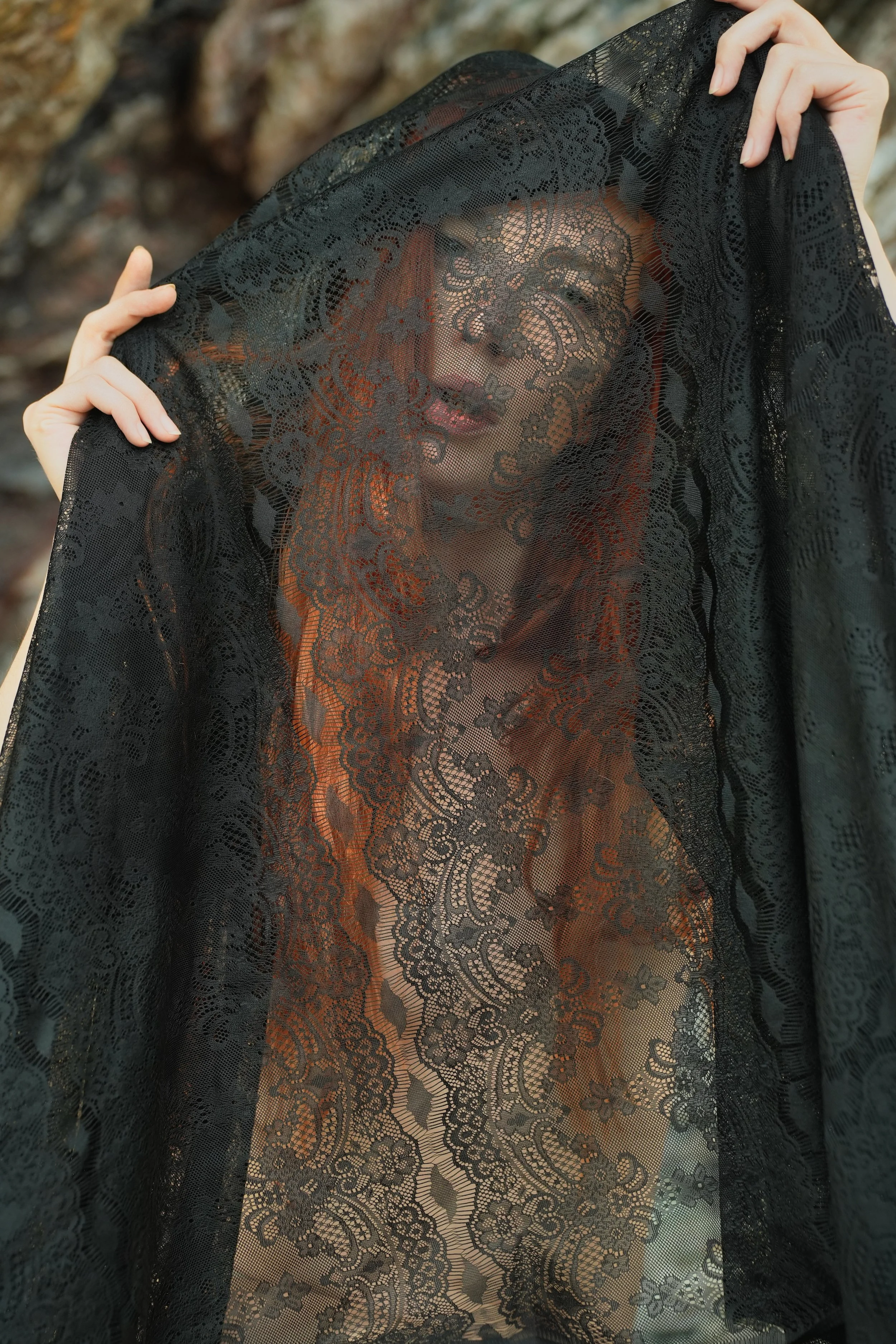
I want to continue building work with stronger artistic identity and collaborate internationally with magazines, brands, and creative people who value storytelling.
Beyond publications or recognition, my goal is to create images that remain meaningful over time — work that people remember because it made them feel something.
I also hope photography becomes a larger part of my life, not only professionally but as a way of understanding people and experiences.
Christos Charanas’ story is a reminder that powerful artistry does not always begin in classrooms or studios. Sometimes it begins quietly, with a camera, a landscape, a life filled with distant horizons, and the desire to preserve what words cannot fully express. His background as a Mariner Captain brings a rare depth to his photography — a sensitivity to solitude, movement, emotion, and the silent beauty of passing moments.
In only a few years, Christos has transformed a personal passion into a visual language marked by atmosphere, honesty, and feeling. His work proves that photography is not only about technique, but about connection — with the subject, with the viewer, and with the invisible story behind each image. As he continues to grow, collaborate, and shape his artistic identity, Christos stands as a creator driven by love for the craft and by the desire to make images that stay in the heart long after they are seen.
Photo: @chris_chrns
Model: @giulietta_kotsyurko
Via @officialkavyar
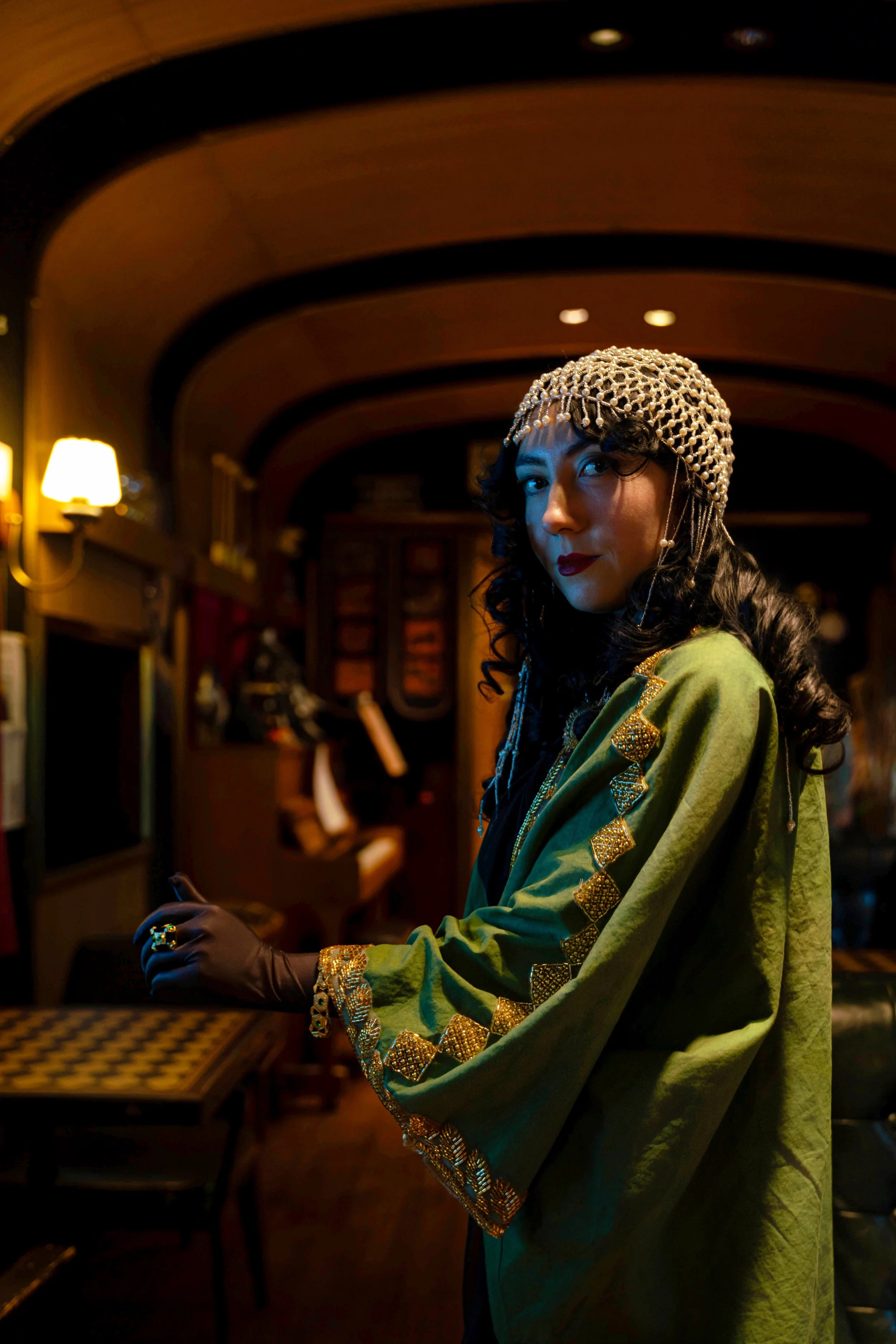
Elle Farrell-Kingsley’s
Elle Farrell-Kingsley’s work exists in that rare space where fashion becomes cinema, memory, and character all at once. In this interview, she reveals the layered process behind a striking editorial inspired by 1920s silhouettes, silent film presence, Art Deco atmosphere, and the romance of early train travel. As both designer and model, Elle does not simply wear the garment — she inhabits the world she has created. Through hand-beading, historical references, theatrical proportion, and a deeply cinematic eye, she transforms fashion into a scene from an imagined film, suspended somewhere between archive, fantasy, and dream.
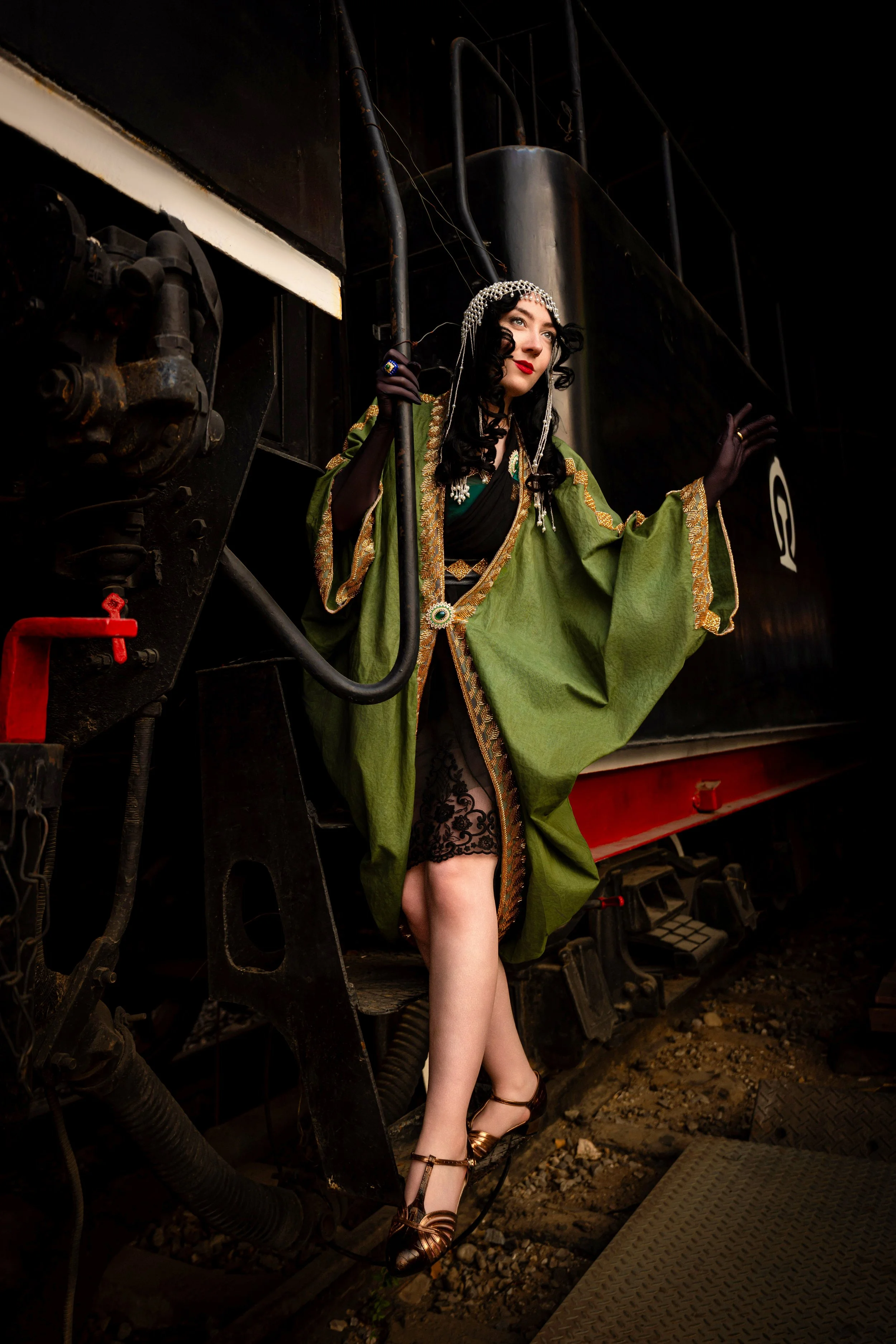
Elle Farrell-Kingsley’s work exists in that rare space where fashion becomes cinema, memory, and character all at once. In this interview, she reveals the layered process behind a striking editorial inspired by 1920s silhouettes, silent film presence, Art Deco atmosphere, and the romance of early train travel. As both designer and model, Elle does not simply wear the garment — she inhabits the world she has created. Through hand-beading, historical references, theatrical proportion, and a deeply cinematic eye, she transforms fashion into a scene from an imagined film, suspended somewhere between archive, fantasy, and dream.
Can you tell us about the original concept behind this shoot and what inspired you to create it?
Well, I was invited to a 1920s Murder on the Beijing Express mystery party, and the dress code sparked the initial idea. From there, I began curating visual and cultural artefacts rather than constructing a fixed narrative. I assembled snippets, such as silent film stills of 1920s actress Evelyn Brent, Paul Poiret’s cocoon silhouettes, and imagery tied to early steam travel.
I also spent time working through archival material and vintage fashion posters. This research stage is one I tend to stay with for a while. It gradually forms its own internal world before design decisions are made.
As both the model and the fashion designer for this editorial, how did you approach building a character and visual world through your design?
Because I was both creating and embodying the piece, I approached it almost like costume design for a film that didn’t yet exist. I built the world first, imagining a 1920s train in motion, travelling between places without a fixed destination. Then, I considered who might exist within that setting.
The character became someone suspended, not fully anchored to date or place. Like Brent’s on-screen presence, she isn’t meant to represent an everyday woman. Every design choice, from silhouette to beadwork, was made with that in mind, so stepping in front of the camera felt less like modelling and more like stepping into a role already constructed through the garment.
You mentioned inspiration from Paul Poiret’s 1920s cocoon coats mixed with the aura of silent film star Evelyn Brent — what drew you to those references, and how did you reinterpret them in your own way?
What drew me to Poiret was the shift away from restriction. The cocoon coat is structurally simple but conceptually radical, it replaced the Victorian corseted form with volume and movement. Brent inspired something different: control. Her stillness on camera feels deliberate and contained, which aligned with the restrained tone I was aiming for.
I wasn’t trying to recreate the 1920s literally, but more to translate its principles. The proportion is exaggerated, the detailing more theatrical, and I introduced my own language through the draping, lace and beadwork. Those elements aren’t really traceable to a single source, but I’d say they’re where the piece moves from history into interpretation.
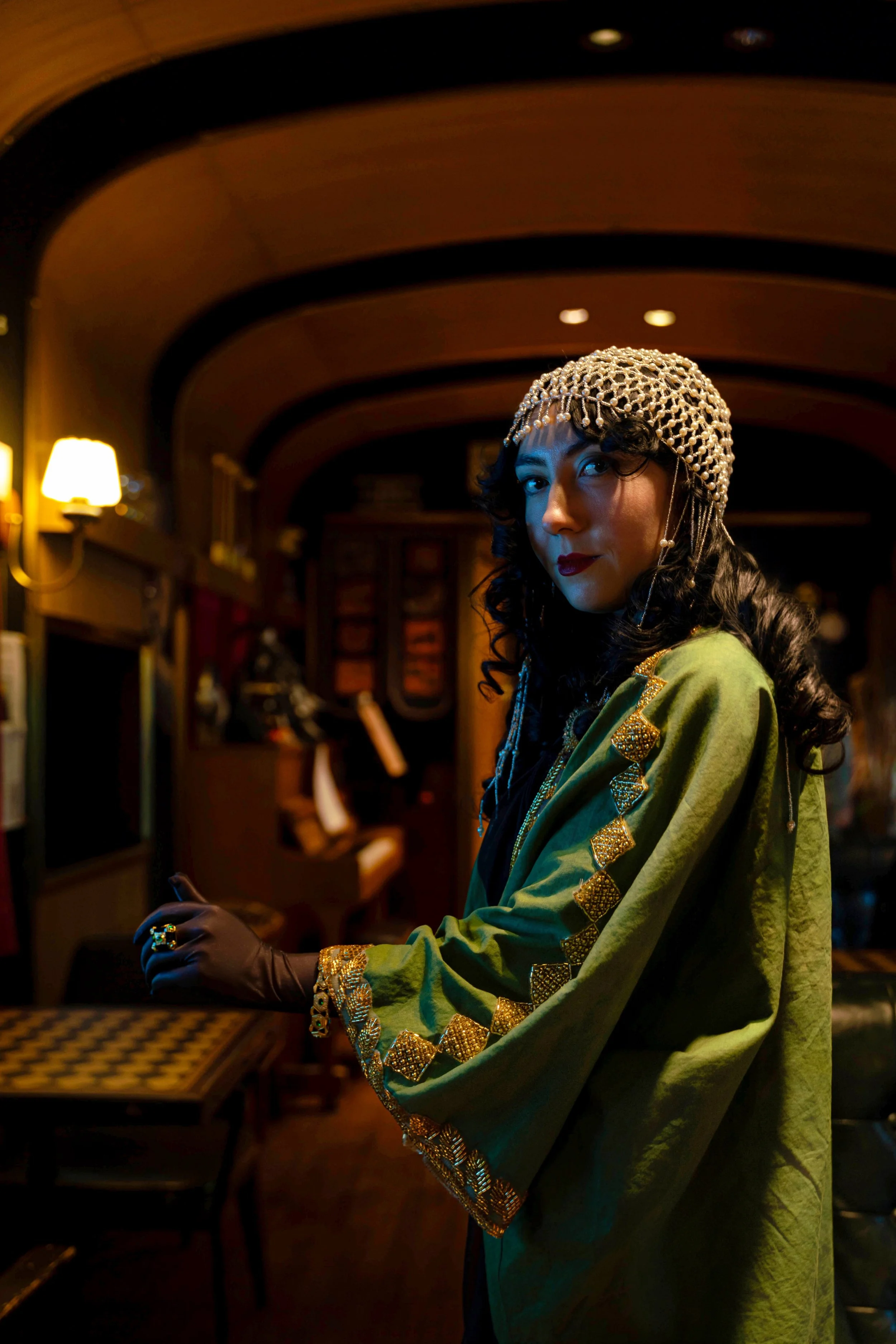
What was the design process like for this garment, from the first idea to the final finished piece seen in the images?
It began with a vintage sewing pattern, which I used as the foundation. I widened the sleeves in response to late 1920s silent film silhouettes. And it was pretty daunting to take it in my own direction. The resulting shape took more of an open, draped sleeve structure, enhancing the theatrical stillness. From there, the coat and dress developed intuitively, based on draping, rather than following a fixed plan.
I was also thinking about the broader visual language of the 1920s — how Art Deco engaged with East Asian visual culture through stylised ornament and patterning, while in Shanghai, the qipao was being modernised into an iconic, fitted silhouette within its own evolving fashion context. Set within the fictional premise of Murder on the Beijing Express and photographed in Beijing, these references shaped the atmosphere.
Then, green and gold were selected for their association with Art Deco opulence and period glamour. The hand-beading stage is slow and immersive, so I often listen to history or philosophy lectures while working. After styling and hair, the piece fully came to life.
What details, shapes, fabrics, or embellishments were most important to you in capturing that vintage yet theatrical mood?
I often begin with the silhouette. For this, I returned to the cocoon form, volume replacing structure.
Material choice is equally important for me. I avoided mass-produced plastic sequins in favour of glass beads, which are closer to the materials used in this period and reflect light in a more uneven, lived way. For the coat, I used linen, while the dress features tulle, as is more common in older pieces. Tulle, however, is quite sheer, so ensuring it wasn’t see-through became an important construction challenge. This was resolved by layering multiple sections and adding lace, which provided the necessary opacity while enriching the texture.
Accessories also helped it come together. The headpiece draws upon Juliette caps, which were fashionable, while the heels nod to that old sense of glamour associated with train travel.
How did you balance historical inspiration with your own creative identity so that the design felt referential while still remaining original?
It was about letting all of these different influences come together to create something new. Some references remain in the research stage but still shape proportion and mood. Others are more visible in the final garment.
The beading and lace introduce my own language, so the piece feels like it could belong to that time, but isn’t trapped inside. It sits somewhere between archival reference and imagined memory, something that feels familiar, but can’t be placed exactly.
Did stepping in front of the camera while also knowing every detail of the design change the way you performed or embodied the look?
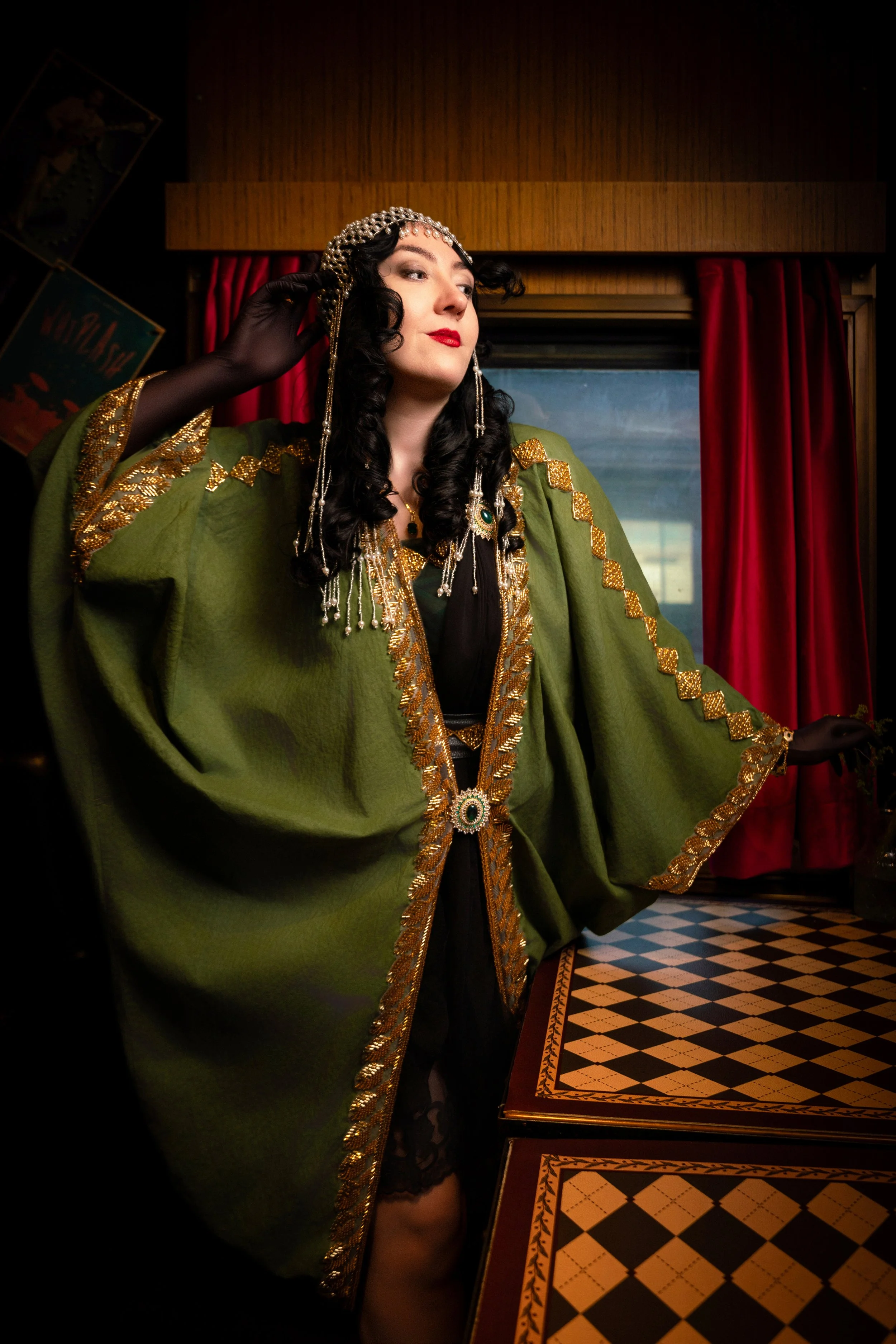
Yes, completely. Once you know exactly how a garment holds and releases shape, you stop posing in a traditional way and start reacting to it. In this case, the widened sleeves and softer structure meant movement was key. I tried to respond to the fabric's behaviour, as though it were a living extension of the character. Small shifts, such as how a sleeve falls back or how the coat opens, guided the gestures.
The shoot has a strong cinematic atmosphere, almost like a forgotten silent-era fantasy. How did you work as creative director to shape that mood visually?
I approached it like directing a scene from a lost silent film, something half-remembered and slightly out of reach. The train setting is visually dominant, so the challenge was balancing restraint with theatricality. I also considered lighting and texture, the aged exterior of the train against the richness of the materials. Together, they suggest a time without keeping it fixed, keeping the scene in motion.
I must also credit the photographer on this shoot, Mikhail, whose artistic eye was essential in creating what you see.
What do you hope viewers notice first when they see this design, and what feeling or story do you hope it leaves behind?
The first impression should be the silhouette, which was always the priority. Ideally, it should read immediately, even from a distance. Beyond that, I was hoping for a sense of narrative ambiguity, like something is happening just outside the frame — unresolved and still unfolding.
Looking back on this project, what did this experience teach you about your voice as a designer and creative director, and where would you like to take that vision next?
This project helped reveal my style as rooted in cinematic storytelling and couture world-building. Looking forward, I’m interested in expanding this into more spatial contexts. The project I’m developing, The Vintage Futurist, builds upon historical patterns but places them within experimental materials and environments, where garments exist as part of a larger, constructed story rather than as a single image.
Elle’s work carries the elegance of history, but never feels trapped by it. Every sleeve, bead, fabric choice, and gesture becomes part of a larger story — one that feels timeless, mysterious, and carefully constructed. Her vision is personal, atmospheric, and unmistakably her own. With projects such as The Vintage Futurist ahead, Elle Farrell-Kingsley’s creative voice feels ready to expand even further, moving beyond the garment and into full worlds of cinematic design, emotion, and imagination.
Model & MUA & Fashion & Cr Dir & Hair & Photo: @ellefkingsley
Photo: @fotomikhanix
Mar Jie Interview
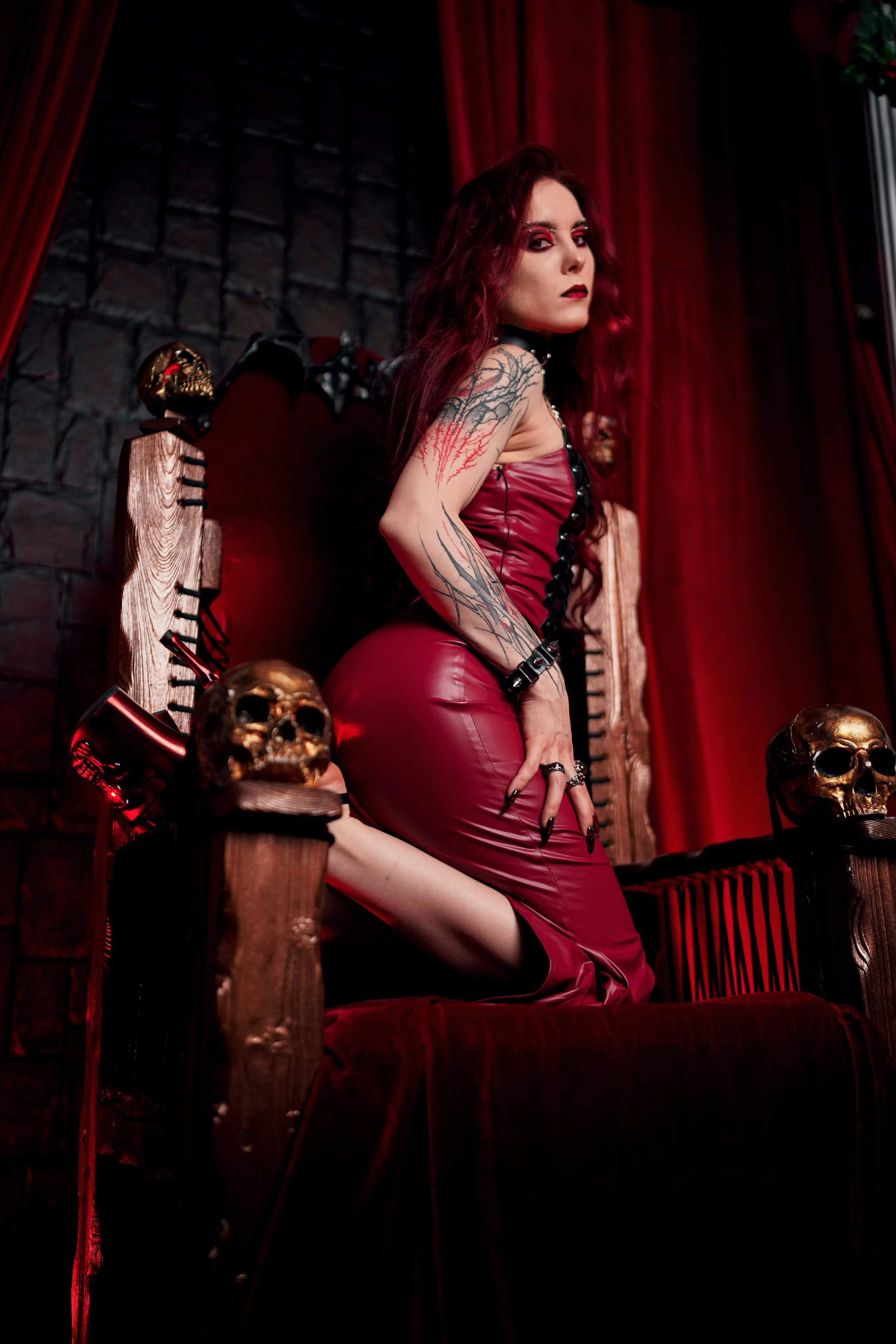
Mar Jie brings a striking sense of depth, elegance, and dark individuality to the world of alternative modeling. Her work is rooted in gothic beauty, emotional intensity, and a powerful fascination with the mysterious side of life. Through her imagery, she embraces darkness not as something negative, but as a place of strength, creativity, and self-discovery. With a style that is both haunting and refined, Mar Jie represents the beauty of standing apart, creating visuals that feel bold, atmospheric, and deeply personal.
Mar Jie brings a striking sense of depth, elegance, and dark individuality to the world of alternative modeling. Her work is rooted in gothic beauty, emotional intensity, and a powerful fascination with the mysterious side of life. Through her imagery, she embraces darkness not as something negative, but as a place of strength, creativity, and self-discovery. With a style that is both haunting and refined, Mar Jie represents the beauty of standing apart, creating visuals that feel bold, atmospheric, and deeply personal.
1. How did your journey into modeling begin, and what first drew you toward gothic and alternative aesthetics?
My modeling journey began gradually. I loved looking at the work of gothic models and photographers, and through that, I developed my own visual sense. This aesthetic drew me in because it embraces darkness, melancholy, mystery, decay, and the eerie — not as something purely negative, but as a way to face life’s challenges, find beauty in imperfection, and explore the “other” side of human experience.
2. How would you describe your personal style and identity as a goth/alternative model?
My identity and style come from my personal perception and character. I focus on self-confidence, creativity, and depth. Gothic, for me, is a way of thinking based on mystery, rebellion, and acceptance of the darker sides of life, which are reflected in my work.
3. What does gothic beauty mean to you personally?
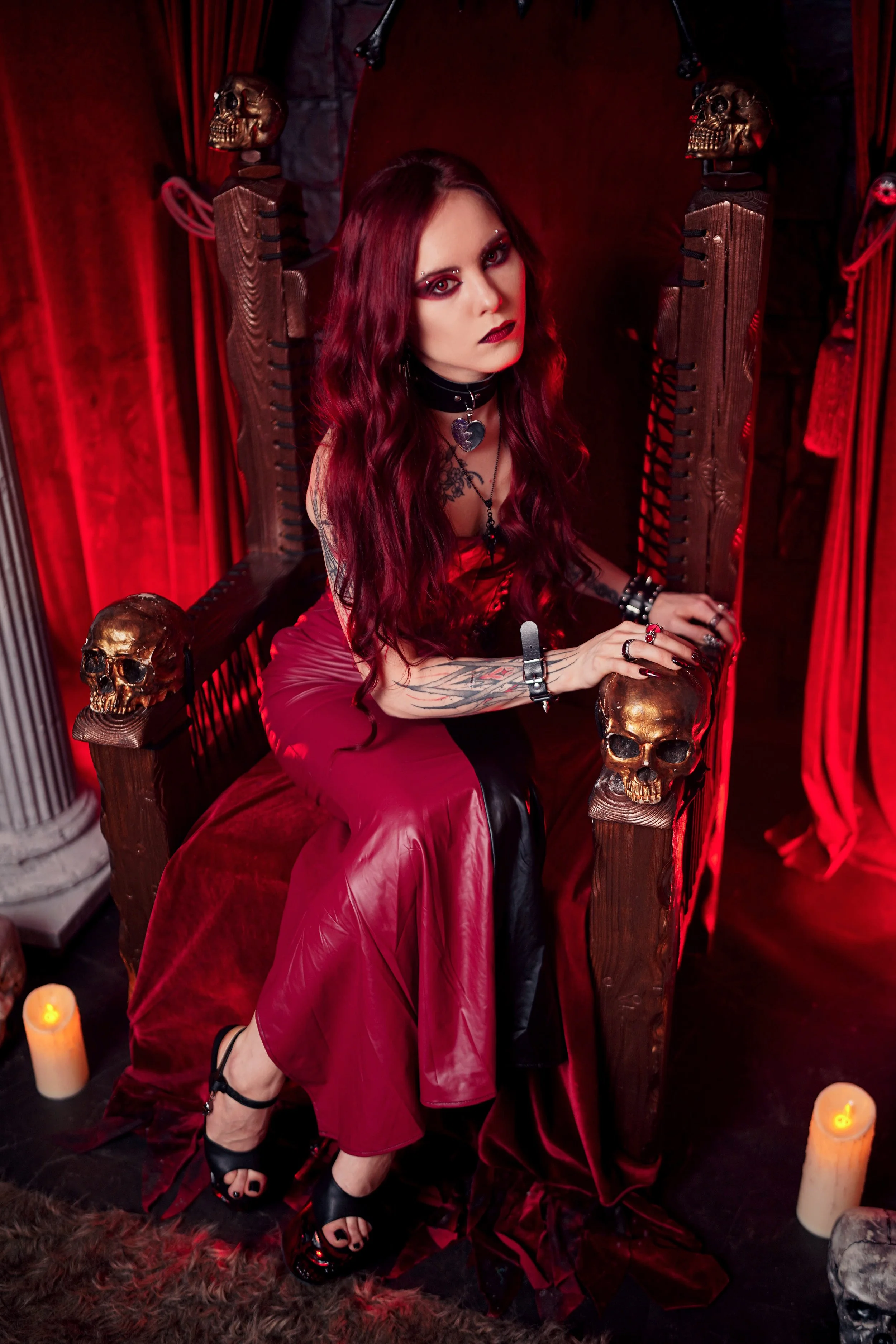
For me, gothic beauty is a mixture of mysterious elegance and intellectual menace. I do not just wear the night — I question it, analyze it, and wear it better than it exists on its own.
4. Are there any subcultures, music scenes, artists, films, or fashion movements that inspire your visual world?
Music is what inspires me the most, especially gothic metal. I could never pick just one artist, because each of them holds a unique place in my heart. I am also very inspired by people who experiment with bold, multifaceted gothic styles in their photoshoots.
5. When you step in front of the camera, what kind of energy or story do you try to bring into the image?
It all depends on the specific image and the creative direction of the photoshoot. It could take on a Victorian Gothic style that emphasizes grandeur and allure, or lean into a horror concept where I recreate an iconic character look, fully embracing experimentation without hesitation. As a model, I try to bring a combination of professional, creative, and human energy to the image.
6. How do you balance darkness, elegance, rebellion, and femininity in your modeling work?
Through many years of hands-on experience and close observation, I have found a strong sense of balance. Each photoshoot becomes an opportunity to develop, review, and learn from previous missteps.
7. What has been one of your most memorable photoshoots so far, and what made it special?
The most memorable photoshoot I have done to date was my cosplay of Pinhead from Hellraiser. What made it truly special is that, as a five-year-old, I used to watch those movies on TV and was absolutely terrified of the character. Preparing for it felt like a big milestone. It was my first truly ambitious cosplay, and I approached it with a mixture of excitement and nervous trepidation.
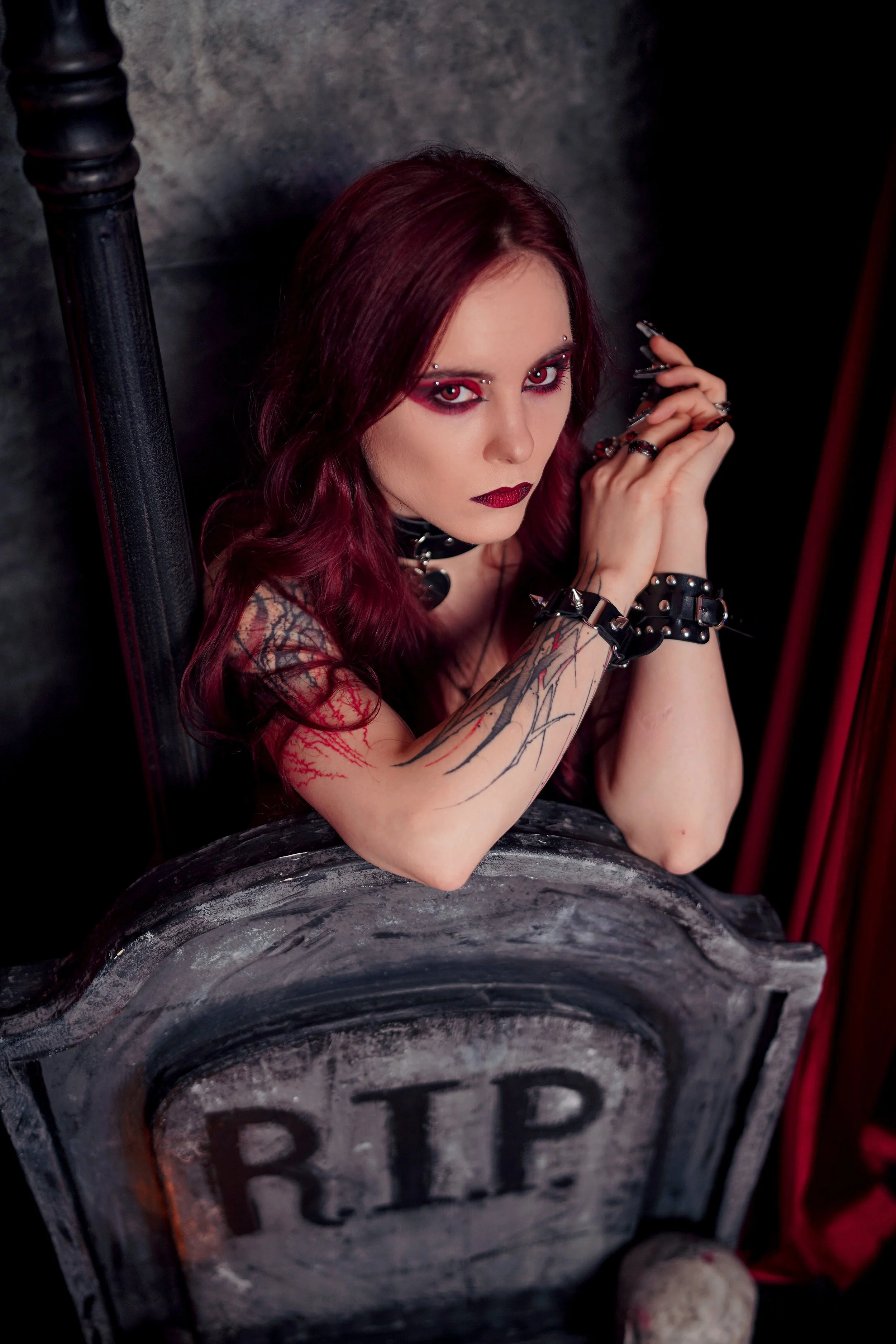
8. Do you feel that alternative modeling gives you more freedom to express who you are compared to traditional fashion modeling?
Yes, alternative style offers me greater freedom for self-expression, as it extends well beyond the traditional fashion industry, where conformity to established patterns often takes precedence over showcasing individuality.
9. What message would you like people to feel when they see your work?
I want to inspire people through my art by showing that unconventional beauty can be just as enchanting and elegant as any other. Most of all, I strive to remain deeply authentic to myself.
10. What are your hopes, dreams, or creative goals for the future as a model?
I want to collaborate with multiple gothic clothing brands, starring in commercials and campaigns that push alternative beauty into the mainstream and inspire others to embrace their unique style.
Mar Jie’s creative presence is a reminder that beauty does not need to be soft, conventional, or easily defined to be powerful. Her work carries the essence of gothic expression: mystery, elegance, rebellion, and emotional truth. Through her modeling, she continues to challenge traditional ideas of beauty while creating a visual world that feels fearless, intelligent, and unmistakably her own.
Model: Mar Jie
Retoucher/Photographer: soulyourasblack
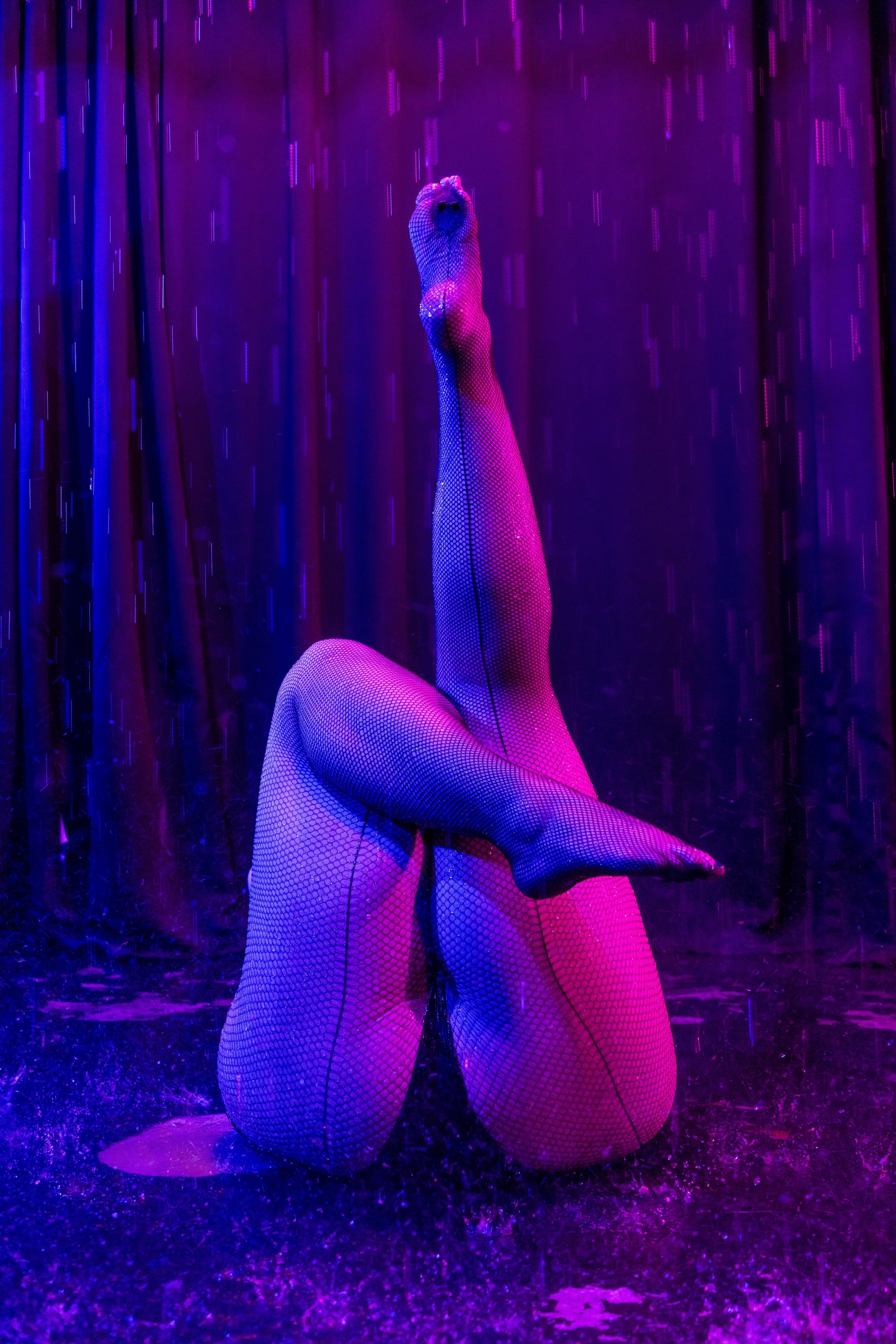
Jillian Pfennig Interview
Jillian Pfennig approaches modeling with the eye of an artist and the presence of a storyteller. Her journey began long before she stepped in front of the camera, shaped by a childhood fascination with magazines, photography, and the quiet dream of one day creating images of her own. What makes Jillian’s work especially compelling is the duality she brings to every set: she understands both the vision behind the lens and the emotion required in front of it. As both model and photographer, she is not simply posing for an image, she is helping to build its atmosphere, its character, and its visual language.
Her presence is quietly commanding, elegant, and deeply intentional. Whether embracing a dark editorial mood, a romantic softness, or the complete freedom of self-portraiture, Jillian brings a strong creative instinct to her work. Through her images, she hopes to inspire emotion, confidence, and the belief that art belongs to every body willing to step into it.
Introduction
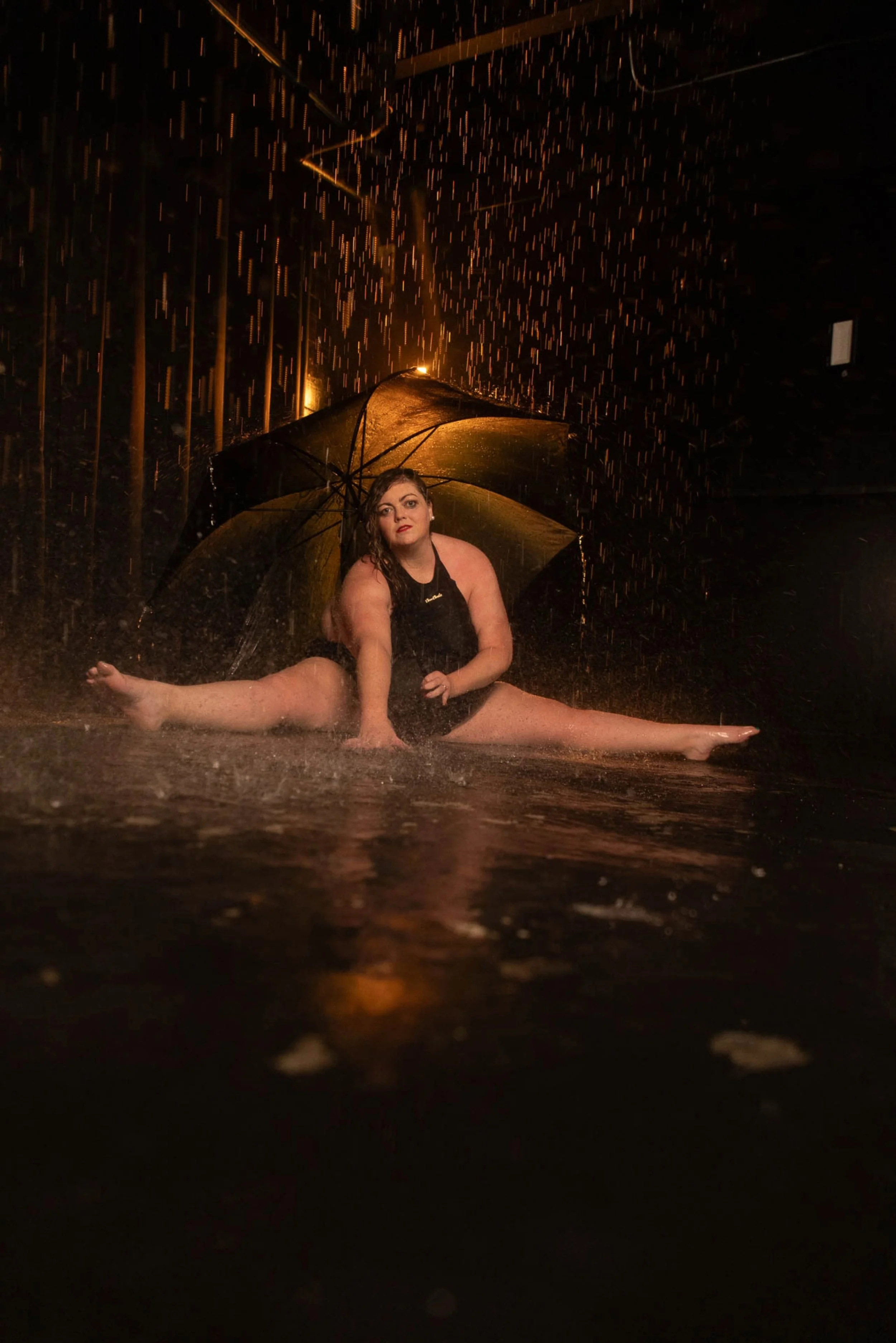
Jillian Pfennig approaches modeling with the eye of an artist and the presence of a storyteller. Her journey began long before she stepped in front of the camera, shaped by a childhood fascination with magazines, photography, and the quiet dream of one day creating images of her own. What makes Jillian’s work especially compelling is the duality she brings to every set: she understands both the vision behind the lens and the emotion required in front of it. As both model and photographer, she is not simply posing for an image, she is helping to build its atmosphere, its character, and its visual language.
Her presence is quietly commanding, elegant, and deeply intentional. Whether embracing a dark editorial mood, a romantic softness, or the complete freedom of self-portraiture, Jillian brings a strong creative instinct to her work. Through her images, she hopes to inspire emotion, confidence, and the belief that art belongs to every body willing to step into it.
Interview
1. How did your journey into modeling begin?
My journey into modeling actually started when I was a kid. I would flip through magazines and keep a binder of images that spoke to me, photos I dreamed of recreating one day.
2. What first drew you to modeling and fashion?
Photography was my first love, and fashion was the natural companion to it. I used to stage photoshoots with my sister and friends, and as I got older I started experimenting with a tripod, trying different angles and themes on myself. The crossover between photographer and subject felt inevitable.
3. How would you describe your identity and presence as a model?
I'd describe my presence as quietly commanding. I bring an art-first perspective to every shoot because I spend just as much time behind the camera as in front of it. That dual vantage point shapes how I move, how I pose, and how I collaborate. I want to be a creative partner in whatever we're making, not a passive subject.
4. What do you enjoy most about being in front of the camera?
I love transforming into whoever the shoot needs me to be. Channeling different parts of my personality is so fun, whether it's a dark and moody concept or something fun and bubbly. Slipping into that persona is what helps me get the best photos possible.
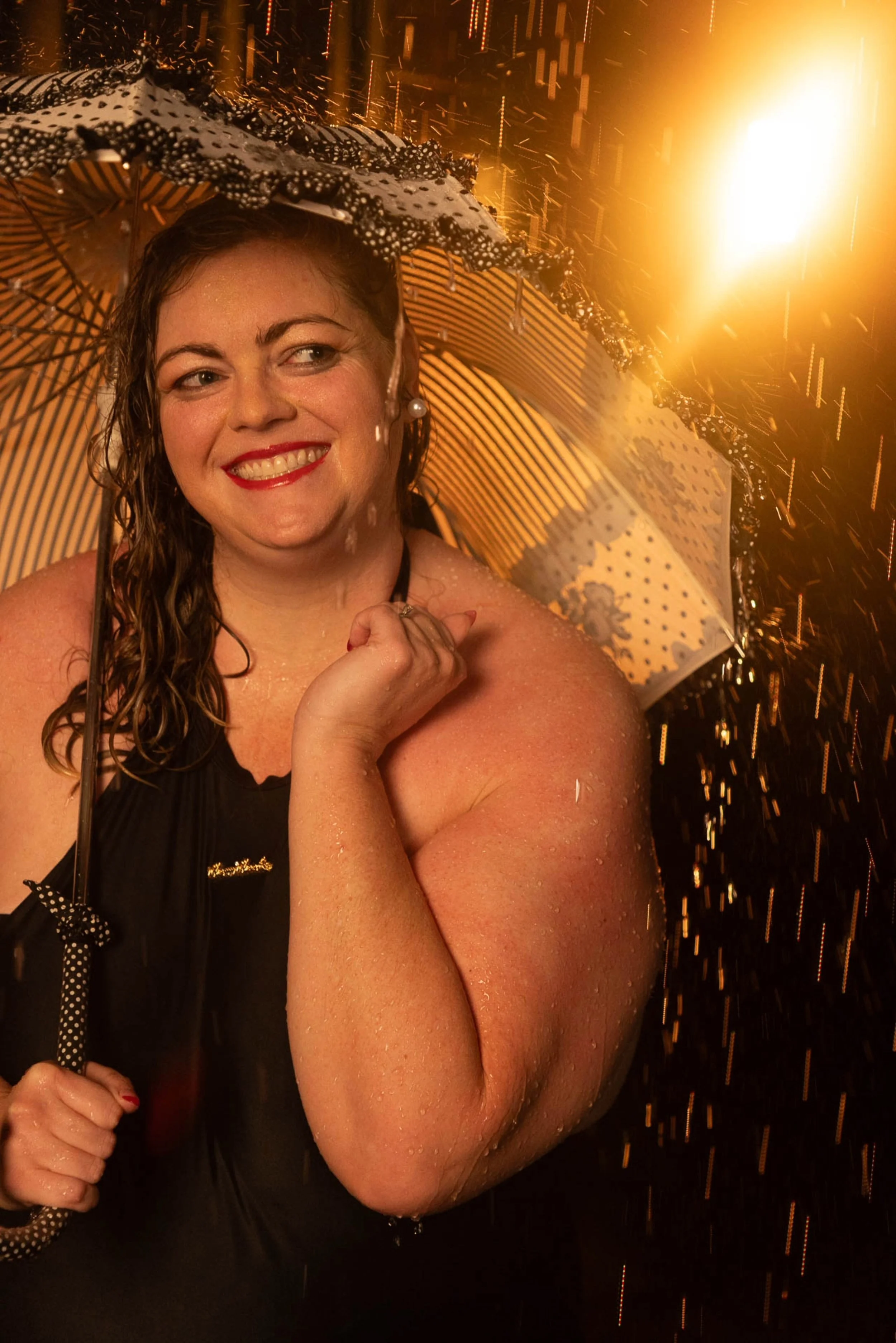
5. How do you prepare yourself mentally and creatively before a shoot?
Because I'm also a photographer, I usually have a mental library of images I want to create before I even step on set. I love collaborating with photographers and makeup artists to build on that vision, and I'm always open to trying a weird position or unexpected idea if it means getting the shot.
6. What helps you connect with a concept or mood during an editorial?
It comes down to fully immersing myself in the world of the concept. I love a wide range of aesthetics, so I try to find the thread in each one that I can genuinely feel, whether that's the softness of a romantic editorial or the edge of something darker. Once I feel it, the poses and expressions follow naturally.
7. How would you describe your personal style outside of modeling?
My personal style is rooted in simple elegance. I love getting dressed for the occasion, whatever it calls for. If it's Oktoberfest, I'm in a dirndl. If it's a black-tie night, I'm in a gown. I think there's something really special about leaning into the spirit of a moment through what you wear, whether that's a traditional outfit, an everyday look pulled together with intention, or a full editorial moment just because.
8. What has been one of the most memorable moments of your modeling journey so far?
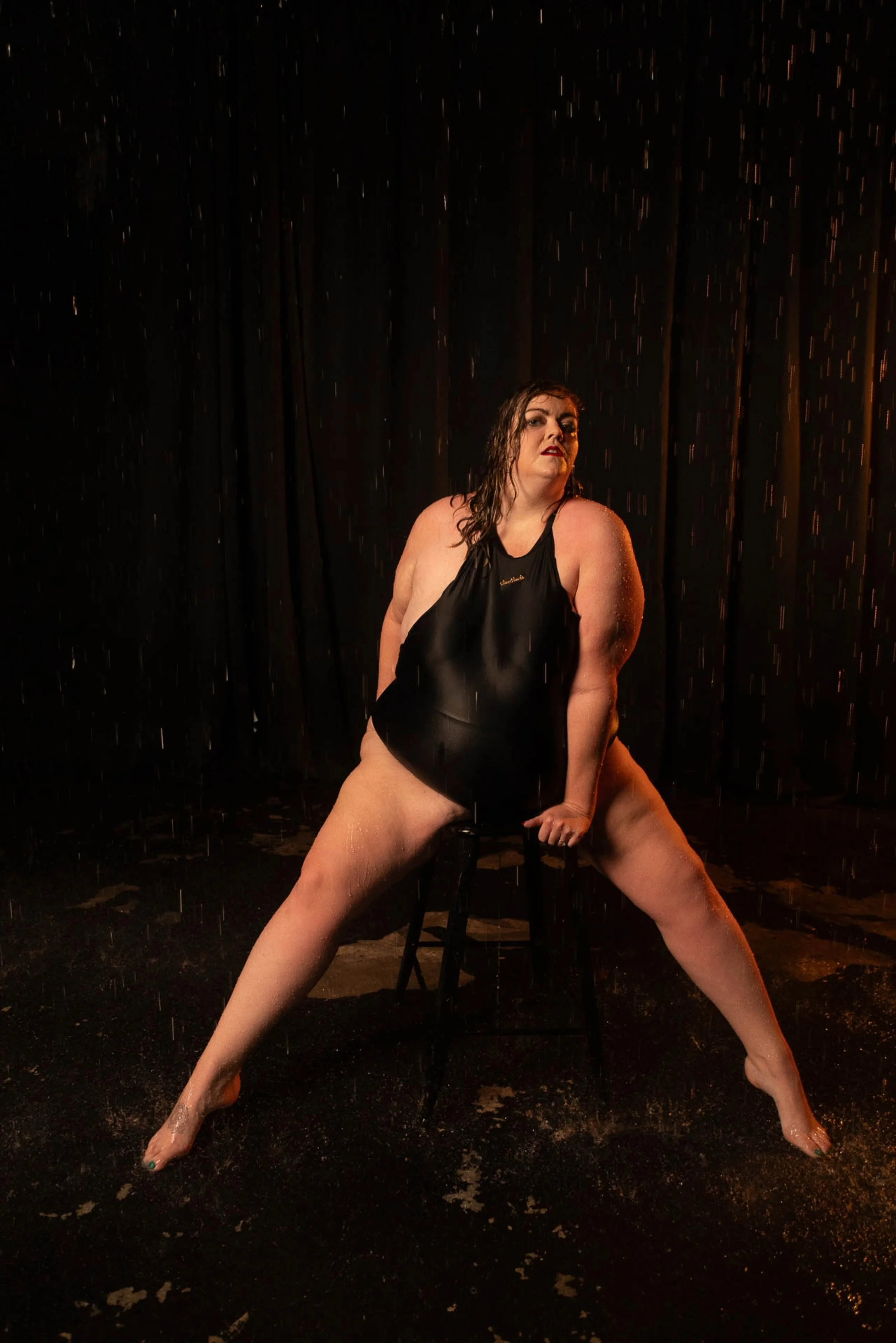
I was modeling at an event, walking around in one of the designer's gowns, when Sharon Stone came up to me and told me I was gorgeous and to keep going. Earlier that day the designer had complained that my hips were too big and switched the dress I was supposed to wear, so I was feeling completely defeated. Having Sharon Stone approach me just to say keep going was the push I needed to continue on this journey.
9. What do you hope people feel or see when they look at your images?
I always want people to feel emotion from my photos, regardless of what that emotion might be. Also, as a plus model, I hope to inspire people to still create art and put themselves out there despite their size, etc.
10. What are your goals and dreams for the future as a model?
I want to keep pushing my boundaries, keep translating my visions into reality, and continue growing my community. Most of all I hope to keep getting opportunities to create magic with other artists!
Bonus Q: You do a lot of self-portrait work. What’s that process like for you?
I work as a self-portrait model often, which means I'm the creative director, photographer, and subject all at once. I love the freedom of simply creating on my own terms, though it can be hard being the only set of eyes on a project. Having full control and watching a vision come to life is incredibly rewarding, and I still love the shoots where I get to collaborate with other creatives and make something magical together.
Conclusion
Jillian Pfennig’s story is one of creativity, resilience, and artistic self-possession. From staging early photoshoots with friends to directing her own self-portrait work, she has built a modeling identity rooted in imagination, collaboration, and emotional honesty. Her memorable encounter with Sharon Stone became more than a beautiful moment; it became a reminder to keep going, to trust her presence, and to continue creating despite doubt or discouragement.
As she looks toward the future, Jillian remains focused on growth, community, and the magic that happens when artists come together with a shared vision. With her thoughtful approach, elegant presence, and art-first perspective, she continues to prove that modeling is not only about appearance, but about transformation, storytelling, and the courage to be fully seen.
Model: @jillianpfennig
Photo: @pixelflock
Steele Harden Interview
Steele Harden is a photographer driven by imagination, emotion, and the timeless pull of visual storytelling. With a style rooted in fantasy portraiture, his work invites viewers into worlds touched by magic, memory, and cinematic wonder. Whether inspired by dreams, films, or distant eras, Steele approaches each image with a deep desire to create something immersive and authentic. In this interview, he shares the journey that led him to photography, the importance of storytelling in his work, and the passion behind images that transport us beyond the everyday.
Steele Harden is a photographer driven by imagination, emotion, and the timeless pull of visual storytelling. With a style rooted in fantasy portraiture, his work invites viewers into worlds touched by magic, memory, and cinematic wonder. Whether inspired by dreams, films, or distant eras, Steele approaches each image with a deep desire to create something immersive and authentic. In this interview, he shares the journey that led him to photography, the importance of storytelling in his work, and the passion behind images that transport us beyond the everyday.
1. Can you tell us how your journey into photography first began?
My journey began in high school when I took a photography class. I fell in love with the whole process of taking pictures and developing them in a dark room.
2. What draws you most to photography as your form of expression?
I get visions or ideas in my head and I find that photography is the best way for me to express them.
3. How would you describe your visual style and artistic identity?
I would describe my visual style as fantasy portrait photography. I love bringing magic into the photographs — worlds long passed, fantasy, science fiction. All of that, I just love it.
4. Where do you usually find inspiration for your shoots and concepts?
I find inspiration in a lot of things like movies, museums, and dreams.
5. When you approach a new project, what is your creative process like from idea to final image?
Once I have an idea in my head, the first thing I do is start researching clothing of the period to make sure that I’m hopefully close to the era that I want to re-create. I really try to make things feel authentic so that you feel like you are in that world when you see the photo.
6. What do you look for when trying to create a photograph that feels powerful or memorable?
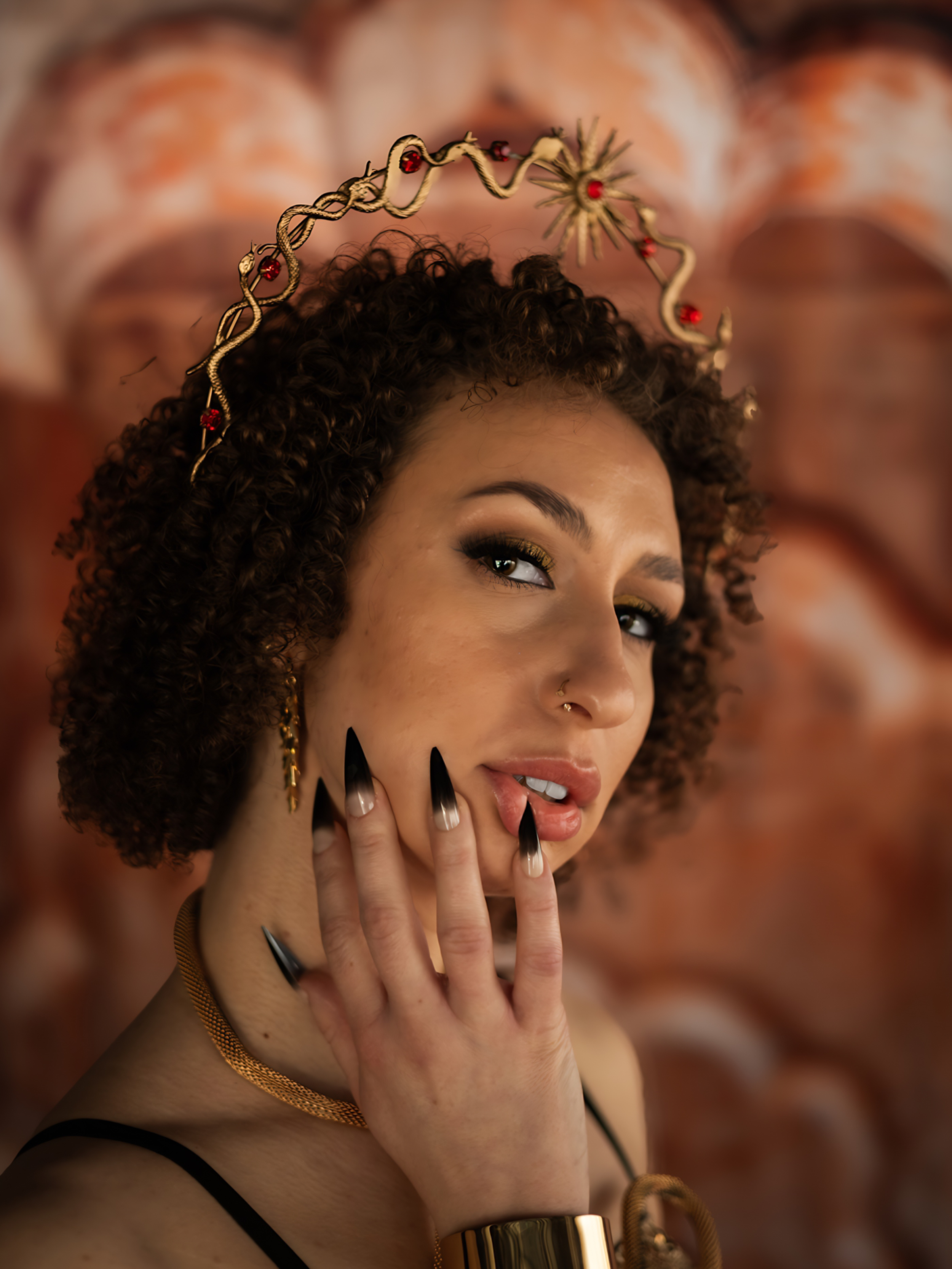
I look for the spark in the model’s eyes. The eyes are the window to the soul and sometimes they give a magic flicker, so I try to capture it if I can with the camera. Sometimes it happens right away, sometimes you can go through a whole shoot and capture it at the end. The model’s eyes are the key. You can have an amazing set and wardrobe, but if the model’s eyes are dead, there is no story.
7. How important are emotion and storytelling in your work?
It is the most important. Without it, you have nothing.
8. What has been one of the most challenging moments in your photographic journey, and what did it teach you?
I could not afford a camera, so I did everything on my phone until I saved up enough money to buy one. This taught me to appreciate every step in my journey, to learn from every failure, and to always try to stay positive.
9. Is there a project or image you have created that feels especially meaningful to you?
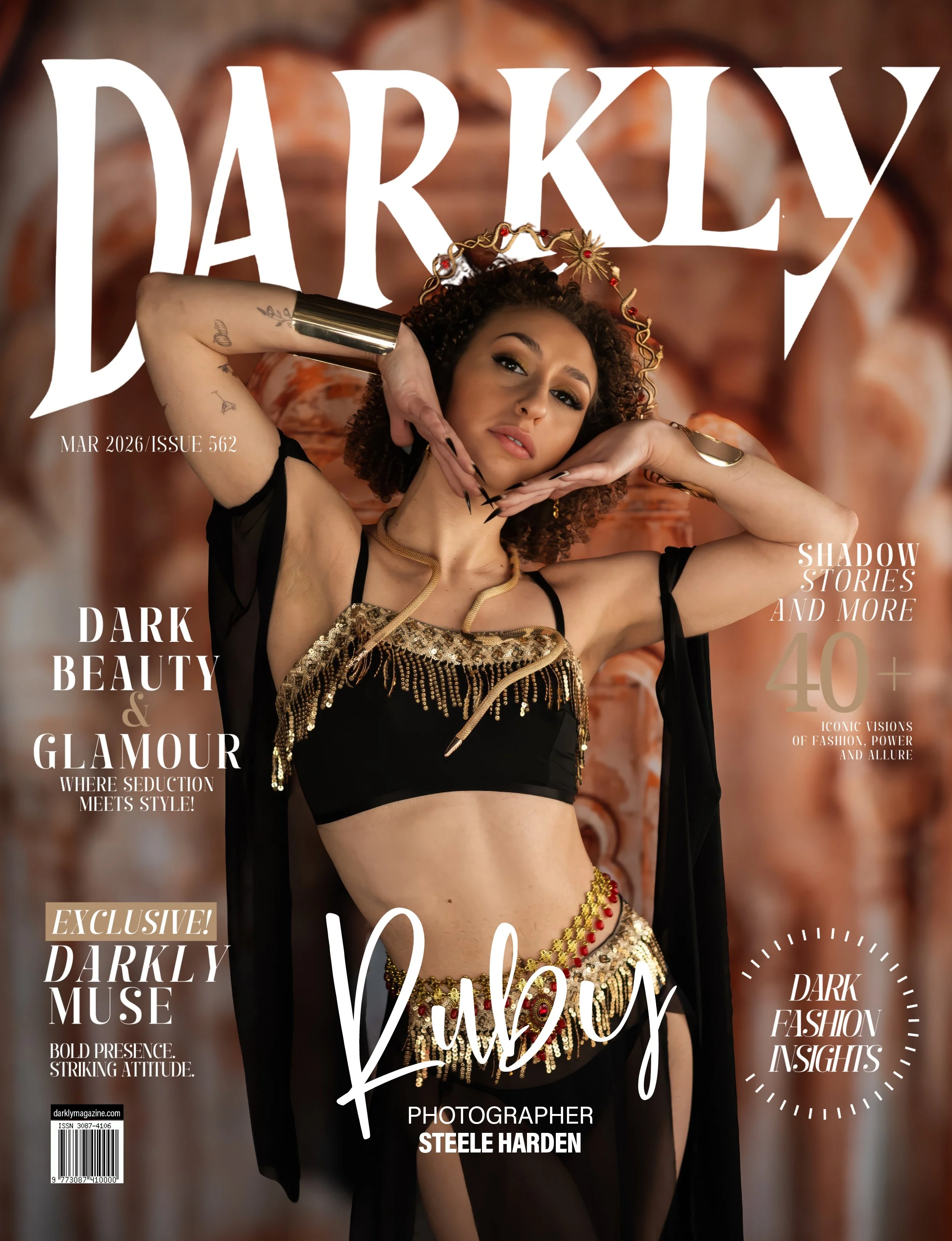
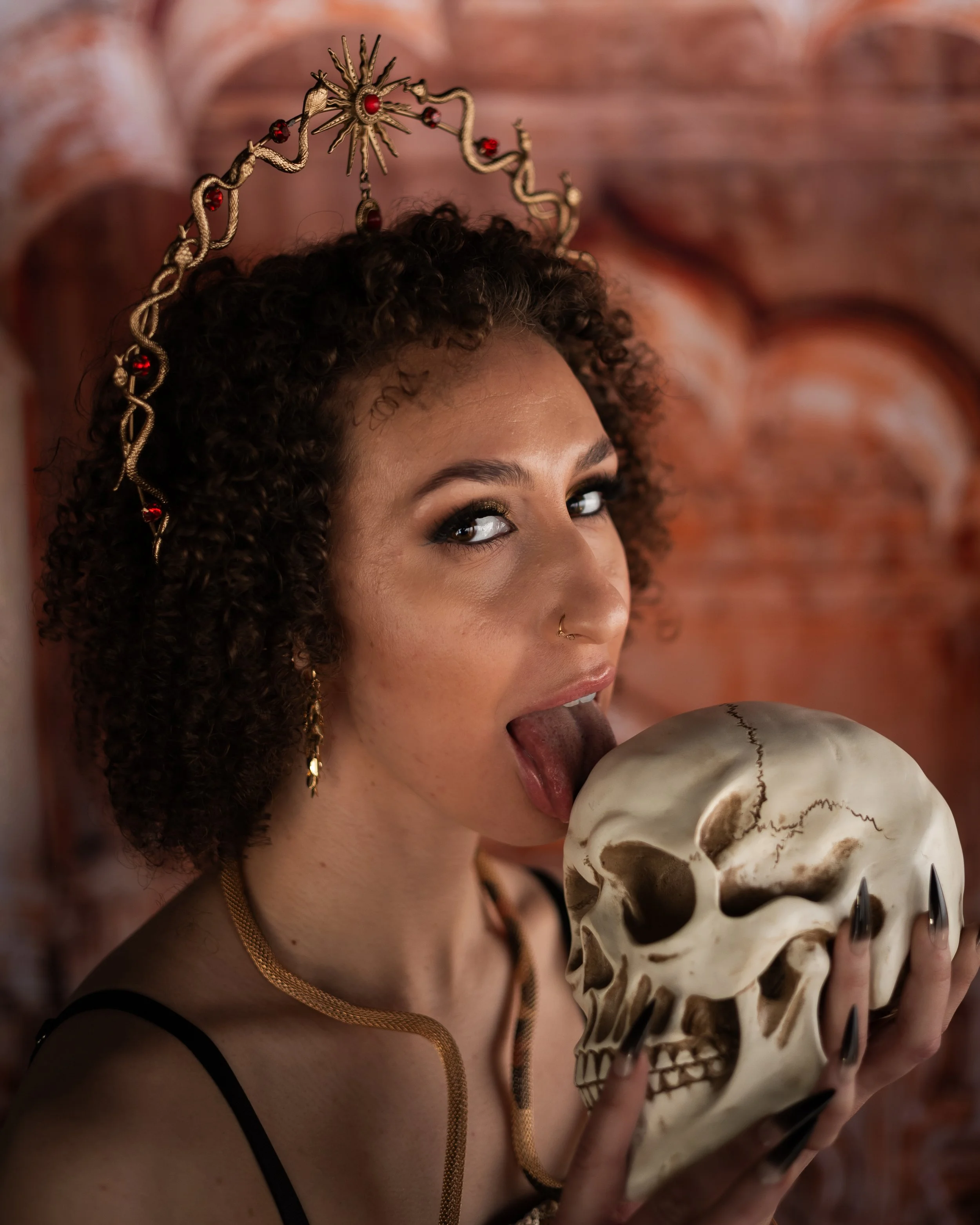
Two moments are especially meaningful to me. The first is having photos I took of my wife published in a magazine. The second was the first cover I ever had, which was for Darkly Magazine with an Athena shoot I did for February 2026.
10. What do you hope people feel or take away when they look at your photographs?
When people look at my photographs, I hope for a second they feel a sense of magic or fantasy, like when you're a child and you read a book or watch a movie. That fantasy realm that you can enter. I hope that I can bring that to people, even if just for a second.
Through his lens, Steele Harden reminds us that photography can be more than an image — it can be an escape, a feeling, and a doorway into another realm. His dedication to authenticity, emotion, and the quiet magic found in a subject’s gaze gives his work a distinct and captivating voice. From humble beginnings shooting on a phone to seeing his art published and featured on the cover of Darkly Magazine, Steele’s journey is a reflection of persistence, vision, and heart. His photographs do not simply capture a scene; they invite us to believe, even if only for a moment, in the beauty of fantasy made real.
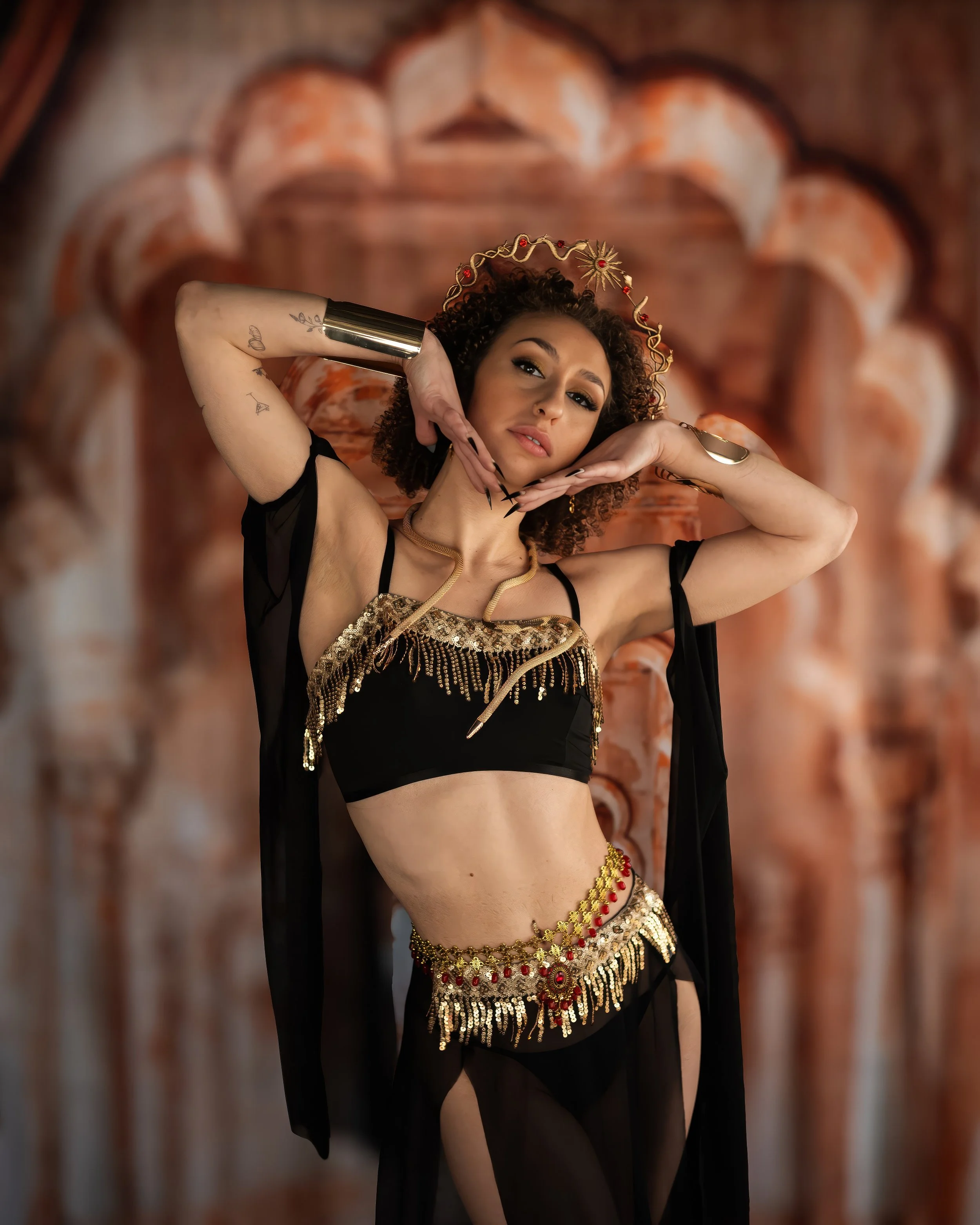
Model/Makeup Artist/Hair Stylist: Ruby
@rubylgrossman
Photographer: Steele Harden
@lost_in_dungeon_photography
https://renderrush.digital.vistaprint.io/s/NT7zR8Vu2SGRjHn3hU5M5

Three Talents, One Vision
Some creative collaborations feel effortless from the very beginning, and this team is a beautiful example of that kind of artistic chemistry. Bringing together photography, modeling, and makeup artistry, they create images that are not only visually striking but also rich in mood, emotion, and storytelling. Their work reflects a rare sense of harmony, where each talent enhances the other and transforms a simple concept into something truly expressive. In this interview, they share how their connection, trust, and shared vision allow them to craft imagery that feels both cinematic and deeply personal.
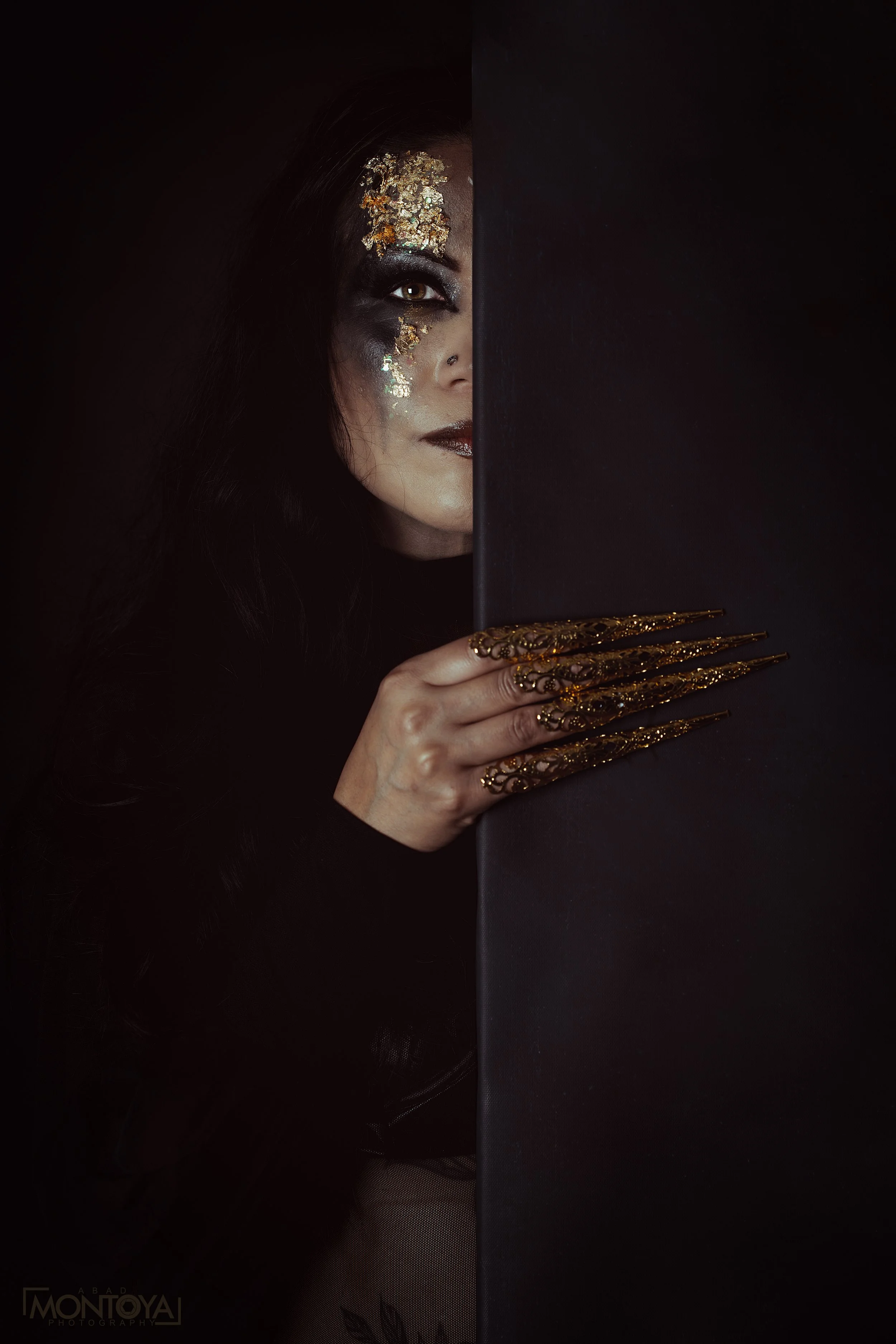
Some creative collaborations feel effortless from the very beginning, and this team is a beautiful example of that kind of artistic chemistry. Bringing together photography, modeling, and makeup artistry, they create images that are not only visually striking but also rich in mood, emotion, and storytelling. Their work reflects a rare sense of harmony, where each talent enhances the other and transforms a simple concept into something truly expressive. In this interview, they share how their connection, trust, and shared vision allow them to craft imagery that feels both cinematic and deeply personal.
1. How did your creative collaboration begin, and what first brought you together as a team?
Our collaboration began through a combination of friendship, admiration for each other’s work, and a shared passion for visual storytelling. Each of us comes from a different creative discipline, photography, makeup artistry, and modeling, but we quickly realized that our visions complemented one another naturally. What started as a simple desire to experiment creatively evolved into a collaboration where we could combine our strengths to create images that feel artistic, expressive, and meaningful.
2. Each of you brings a different talent to the process. How do photography, modeling, and makeup come together to shape the final image?
Each discipline plays a vital role in building the final image. Makeup establishes the visual atmosphere and character, while modeling brings emotion, presence, and storytelling through expression and body language. Photography then unifies these elements through light, composition, and visual direction. When these three creative languages align, the photograph becomes more than a technical image, it becomes a complete artistic expression.
3. When you begin a new project together, where does the first spark usually come from a mood, a face, a styling idea, or an emotion?
Most of our projects begin with a feeling or mood. Sometimes it’s something mysterious, cinematic, or emotionally intense. From that initial spark, we begin to imagine the textures, colors, expressions, and styling that could visually translate that emotion. The process is very organic, and the concept often evolves as we exchange ideas.
4. What do you enjoy most about creating as a team rather than working individually?
Collaboration allows ideas to expand beyond what any of us could create alone. Each person contributes a unique perspective and creative energy, which pushes the project further. What we enjoy most is that exchange of ideas, how one suggestion can inspire another and transform the project into something more dynamic and visually rich.
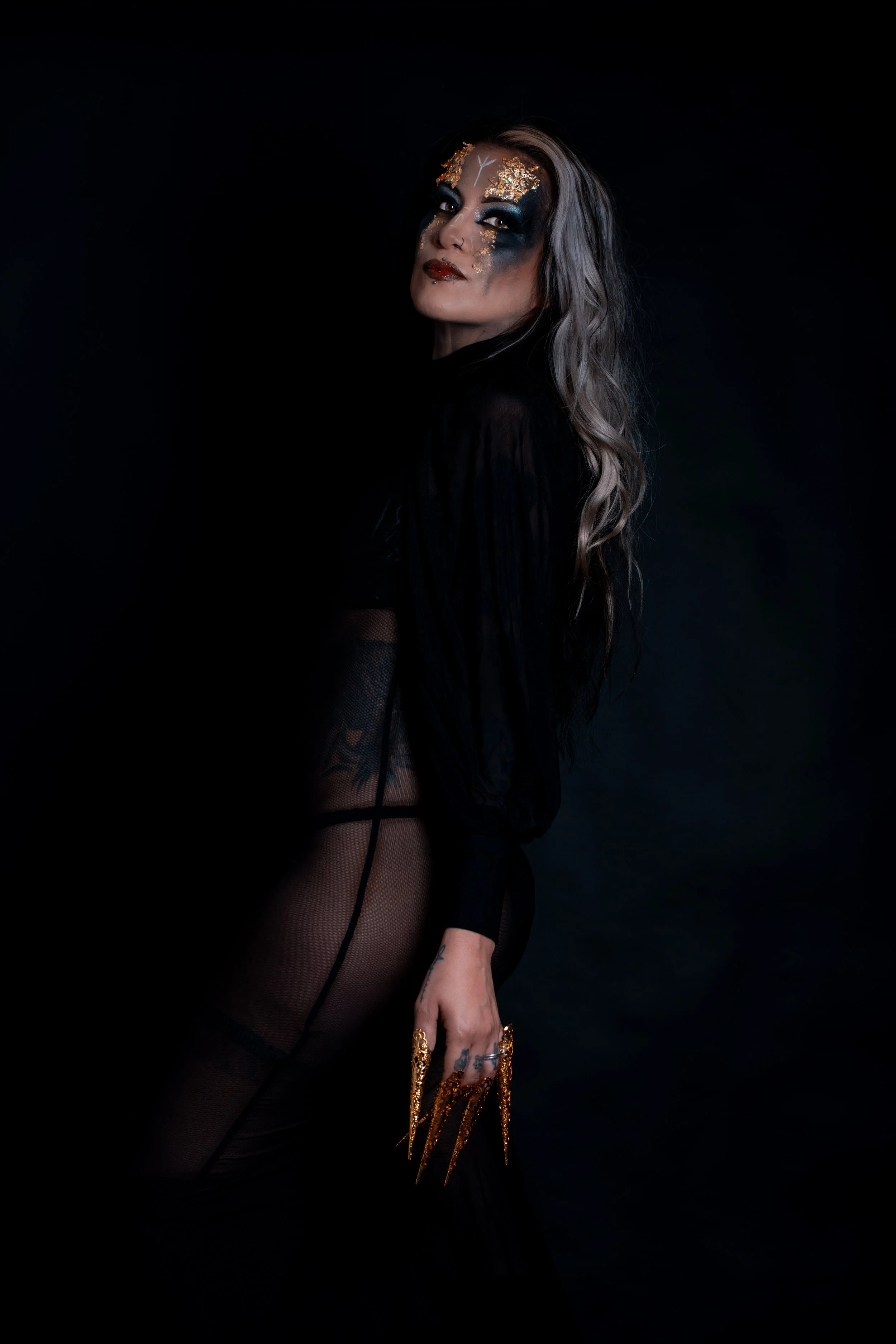
5. There is often a strong artistic energy in collaborative work. How do you inspire one another during a shoot?
A lot of inspiration happens naturally during the shoot itself. A pose, a lighting adjustment, or even a small detail in the makeup can open up new creative directions. Because we share a strong enthusiasm for the work, the creative energy flows constantly between us and keeps the process exciting.
6. How important is trust and creative chemistry in the way you work together?
Trust and chemistry are essential. Since our collaboration is built on friendship and respect for each other’s craft, we feel comfortable sharing ideas openly and experimenting creatively. That trust allows everyone to contribute freely, which ultimately leads to stronger and more expressive images.
7. When creating art as a team, how do you balance each person’s vision while still making the final result feel cohesive?
Communication and mutual respect are key. Each of us brings ideas to the table, but we always keep the central concept in mind. Instead of focusing on one individual vision, we aim to merge our perspectives into a unified artistic direction that feels intentional and cohesive.
8. What kind of mood, emotion, or story do you most love expressing together through your images?
We are often drawn to images that feel cinematic, introspective, and emotionally charged. There is usually a darker or moodier aesthetic in our work, where expression, gaze, and body language play an important role in conveying the story. Through these elements, we aim to create photographs that evoke emotion and invite the viewer to interpret the narrative.
9. In your eyes, what transforms a collaborative shoot into something truly powerful, memorable, or artistic?
A shoot becomes truly powerful when everything aligns, the concept, the emotion, the styling, and the light. Technical skill is important, but what makes an image memorable is the feeling it communicates. When a photograph can speak for itself and connect emotionally with the viewer, it becomes something truly meaningful.
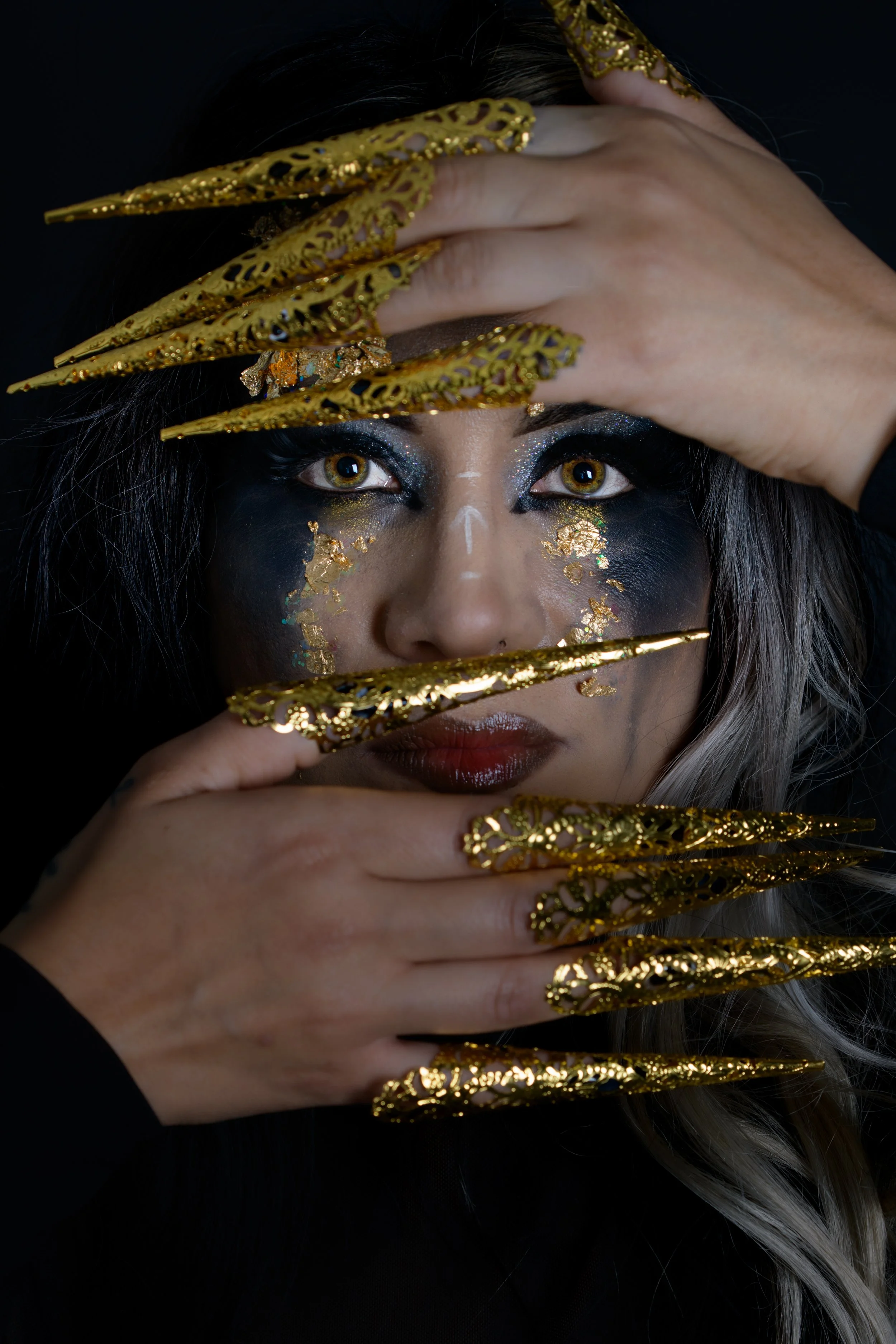
10. Looking ahead, what kind of creative projects or visual worlds would you love to explore together next?
We would love to continue exploring more conceptual and storytelling-driven projects. Our goal is to create images that feel immersive and cinematic, visual worlds where makeup, styling, modeling, and photography work together to build something dramatic, artistic, and emotionally expressive. As we continue to grow creatively, we are excited to push our work into new directions and experiment with even more ambitious ideas.
This interview reveals the strength of a collaboration built on friendship, trust, and a genuine passion for creating meaningful art. What makes their work so compelling is not only the beauty of the final image, but the way each element photography, makeup, and modeling comes together with intention and emotion. Their creative bond allows them to shape visual stories that feel atmospheric, elegant, and memorable. As they continue to evolve and explore new artistic directions, there is no doubt that their future work will continue to captivate and inspire.
There is one tiny punctuation point I would tighten for publication: in question 2 and question 9, the sentence flows better with an em dash or colon instead of a comma before the explanation. I can polish the whole piece into a slightly more editorial magazine style too.
Photo: @abad.montoya
Model: Cristina Hernandez
MUA: @makeup_by_jessiica
Georgia Chioni - SKiN iT FASHION
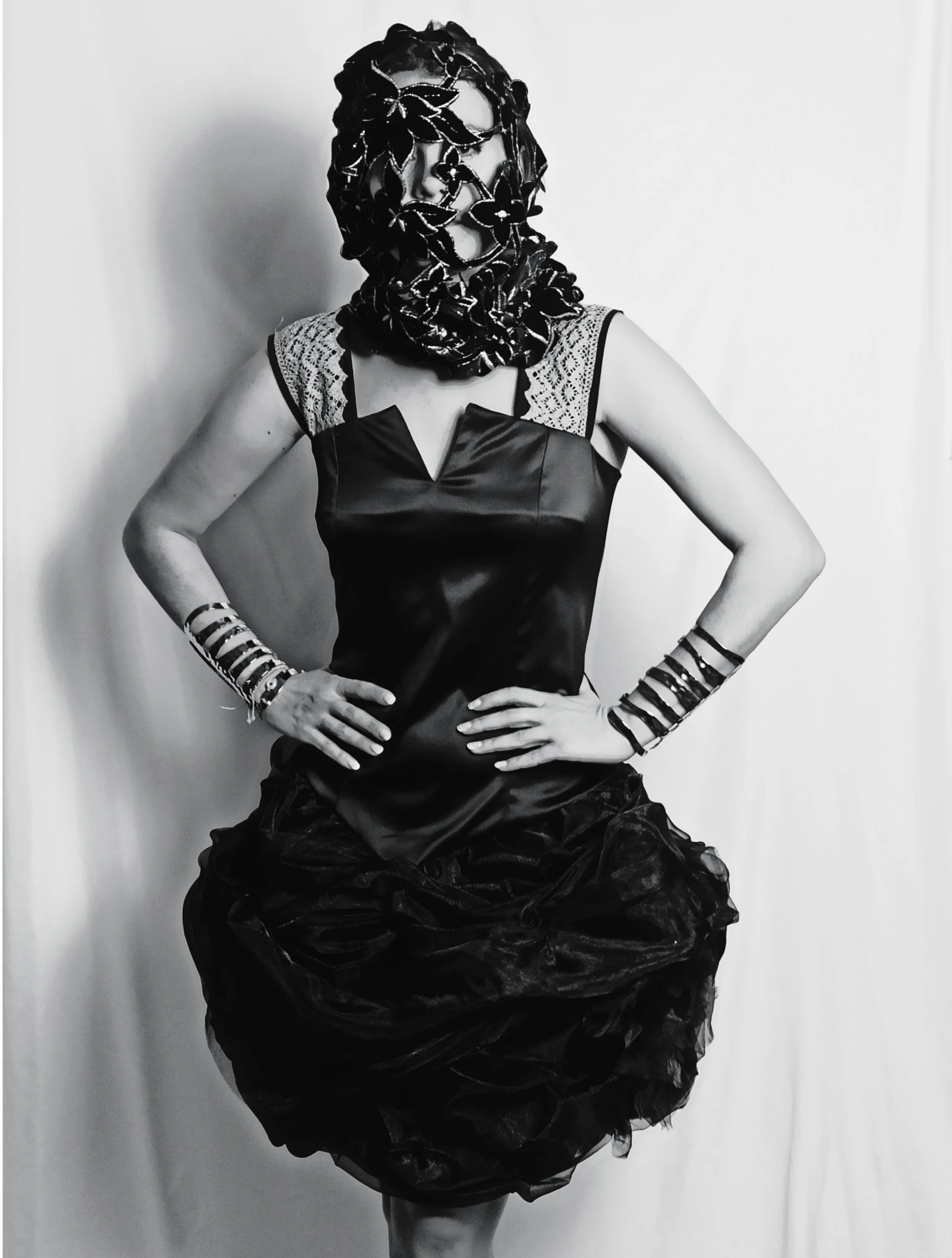
Georgia Chioni, the mind behind SKiN iT FASHION, belongs to a rare generation of designers who do not simply create clothing, but build entire conceptual worlds around it. Her work exists at the crossroads of fashion, philosophy, narrative, and cultural inquiry, transforming garments into expressions of identity, tension, and resistance. Influenced by her studies across Greece, Italy, and Germany, Georgia has developed a singular visual and intellectual language, one that challenges conventional ideals of beauty through the evocative idea of the Anti-Muse. With an approach rooted in craftsmanship, slow fashion, and critical thought, she invites us into a universe where style becomes substance and fashion becomes a powerful form of dialogue.
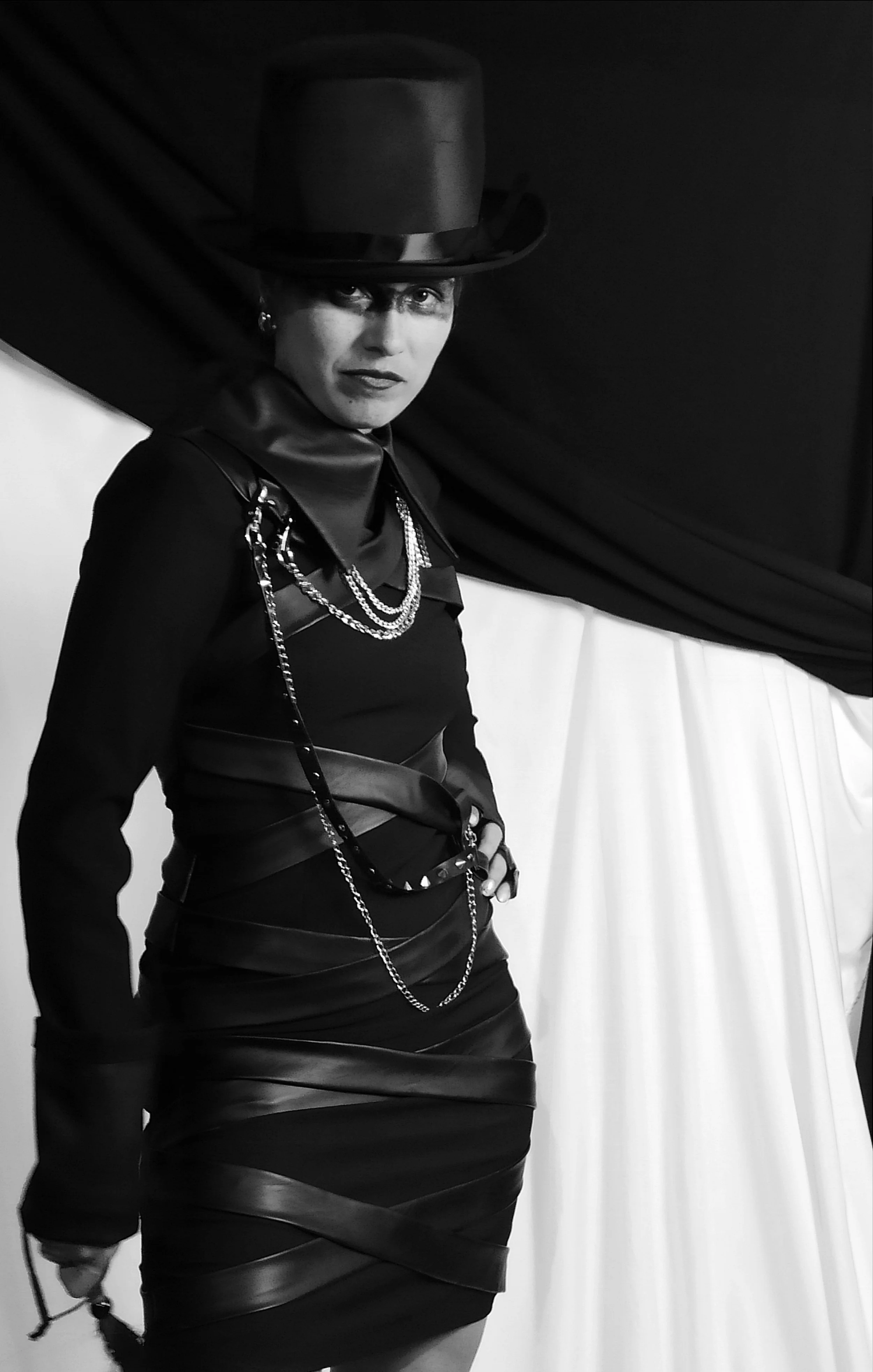
Georgia Chioni, the mind behind SKiN iT FASHION, belongs to a rare generation of designers who do not simply create clothing, but build entire conceptual worlds around it. Her work exists at the crossroads of fashion, philosophy, narrative, and cultural inquiry, transforming garments into expressions of identity, tension, and resistance. Influenced by her studies across Greece, Italy, and Germany, Georgia has developed a singular visual and intellectual language, one that challenges conventional ideals of beauty through the evocative idea of the Anti-Muse. With an approach rooted in craftsmanship, slow fashion, and critical thought, she invites us into a universe where style becomes substance and fashion becomes a powerful form of dialogue.
1. Can you take us back to the beginning of your path in fashion and the moment you knew design would become your language?
My relationship to fashion began less as a career decision and more as a necessity to translate how I perceive the world. I have always been fascinated by the body as a moving architecture and clothing as a second skin that carries meaning. At some point I realized design was not simply about garments, but about constructing narratives and questioning systems. In addition, given my background as cinematographer and author, I became interested in creating fictional environments where garments would function like characters themselves — extensions of narrative worlds that could belong equally to film, literature, or the runway. This approach echoes the idea of Gilles Deleuze, who suggested that art creates “blocks of sensation” capable of generating new realities and perceptions.
Coupling with my theoretical studies on fashion, law and sociology, I combined theories of system governance and autopoiesis that led me to approach fashion not simply as an aesthetic field, but as a self-producing cultural system. All this culminated in creating the idea of the Anti-Muse. Instead of celebrating the traditional muse as an idealized figure, I became interested in the presences that disrupt ideals — those who reveal the fractures of the system itself. In a way, the Anti-Muse embodies the spirit of Michel Foucault’s observation that “where there is power, there is resistance.” Fashion, to me, became a language through which these tensions could be expressed, a space where garments operate as both aesthetic objects and subtle acts of critique, revealing how identity, beauty, and power are constantly negotiated.
2. Having studied in Greece, Italy, and Germany, how have these different creative environments influenced your aesthetic and way of thinking?
Each place shaped a different layer of my thinking. Greece gave me a deep awareness of history, symbolism, and the human body as a sculptural form. Italy introduced me to the discipline of craft and the sensuality of materials. Germany, on the other hand, encouraged conceptual rigor and systemic thinking. Through all this, I would say that I learnt to approach fashion almost as a cultural investigation, with a more analytical way of understanding it as a system that can be questioned, interrupted, and reimagined. Each environment had so many different things to offer, a plethora of challenges to the way fashion is perceived: a societal mirror and an echo reflecting desire.
3. Your brand has earned awards and international recognition. How have these milestones shaped your confidence and direction as a designer?
Recognition is meaningful not simply as validation, but as a signal that ideas resonate beyond our immediate environment. For me, these milestones reinforced the importance of continuing to experiment and to challenge the structures of the fashion system. So rather than pushing me toward conformity, they encouraged me to deepen my conceptual approach and to remain faithful to the idea that fashion can operate critically as well as aesthetically. I am very grateful for all awards that actually showed me the depth and the multidimensionality of fashion in society.
4. How would you define the essence of your brand today, and what makes it distinct in the world of contemporary fashion?
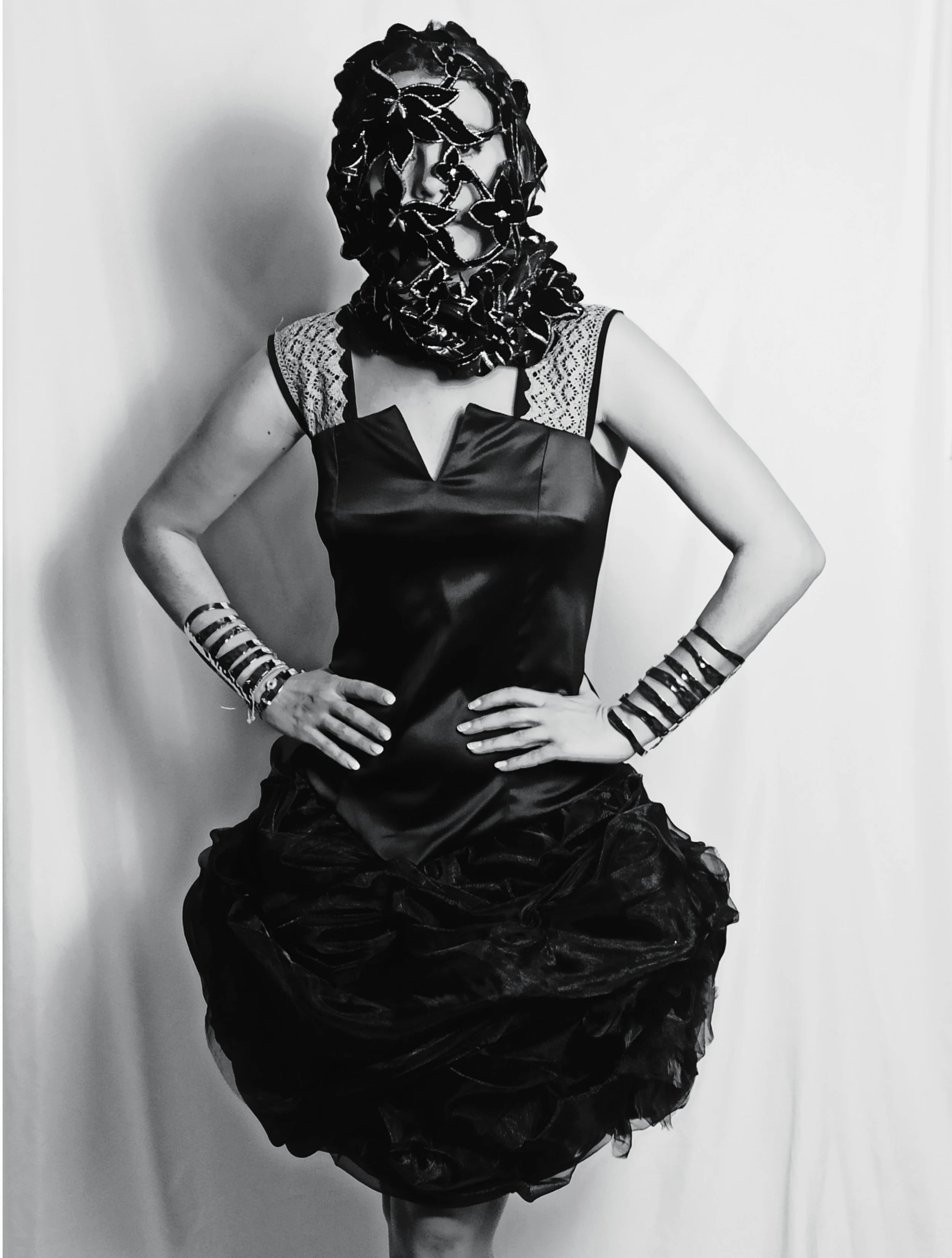
The essence of the brand lies in exploring the relationship between skin, identity, and system. Clothing becomes a locus where personal narratives meet broader cultural frameworks. In this concept, the thematic of the Anti-Muse, that runs through my collections, is crucial: figures that represent a breach in the dominant narrative of fashion. Instead of presenting an ideal of perfection, the collections explore tension, vulnerability, and transformation. The Anti-Muse is not a rejection of beauty, but a reconsideration of it. In this context, garments function almost like membranes between the body and the social system that surrounds it. They both protect and reveal, creating a dynamic interface between individuality and collective structures. Fashion becomes almost a boundary, where knowledge, existence and power interact, a living surface where identity and power continuously unfold. To this end, perfection becomes a myth and tension the truth of beauty.
5. Your collections have appeared in international fashion weeks and catwalk presentations. What does the runway allow you to express that other formats do not?
The runway allows fashion to become a living narrative. It is not only about garments, but about movement, sound, rhythm and presence. Fashion is not simply worn — it is inhabited, negotiated, resisted. In addition, the runway is a space of conceptual expression a moment where bodies, garments, and atmosphere form a temporary system that invites the audience to rethink familiar codes of beauty and identity. This is apparent in all my thematic collections: SKiNNERS, Oblivion and the Phoenix, Welcome to Dieselland, Wonderland I etc.
6. Slow fashion is deeply rooted in your philosophy. What inspired you to embrace a more intentional and conscious approach to design?
I grew up in an environment of domestic circular economy model, where nothing was wasted and clothes lasted for a lifetime. Great-grandmother and grandmother taught us respect for materials, for labor, and for the quiet value of longevity, that is respect the life of objects — their materials, their making, and the stories they carry through time. So, in this way, garments are not disposable things. Rather, I would say, companions. In this context, slow fashion emerged naturally from my desire to create work with depth and longevity as a way of life. The fashion system often operates through acceleration and constant replacement, but I became interested in the opposite: durability, reflection, and emotional connection. Garments that evolve with the wearer over time.
7. How do you weave sustainability into your creative process while maintaining the refinement and strong identity of your work?
For me, sustainability is not only a technical or material decision; it is a way of thinking. It begins with questioning why we create. By focusing on craftsmanship, thoughtful construction, and long-lasting materials, sustainability becomes embedded in the identity of the work rather than applied as an external label. To be more concrete, I focus a lot of applying zero patter techniques, deadstock, doing upcycling work and cooperating with local fabric suppliers to get unused fabrics. In addition, I respect a lot the ethical part of fashion in all my collaborations.
8. From your perspective, how can fashion evolve into a more thoughtful and responsible industry without losing its sense of beauty and desire?
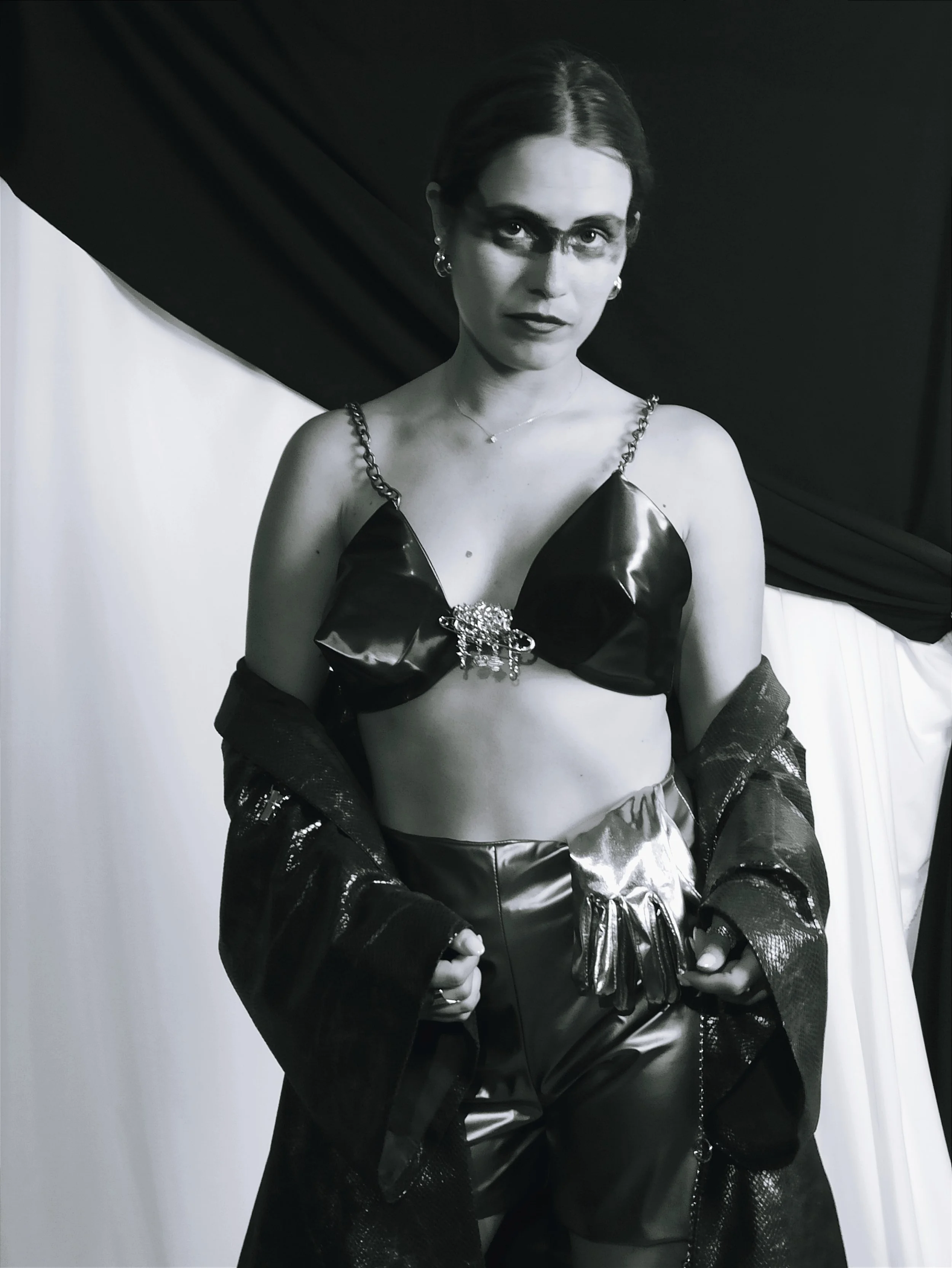
Fashion has always been a space of imagination and desire. The challenge is not to remove that, but to redirect it. Desire can be connected to meaning, to craftsmanship, to stories that resonate deeply. If the industry begins to value cultural and emotional depth as much as novelty, fashion can remain seductive, while becoming more responsible. Actually, I would say that fashion should not eliminate desire — it should give desire meaning. True luxury is time, craft, and narrative.
9. What emotions, presence, or story do you hope your designs awaken in the people who wear them?
In a way, the wearer becomes an Anti-Muse themselves — someone who subtly disrupts expectations and carries a quiet narrative of individuality. Uniqueness, sensuality, dynamism. Clothing is where the body negotiates its place in the world and fashion is a living interface between individuality and structure.
10. As you look to the future, what vision do you hold for your brand and the legacy you hope to build through your work?
Looking forward, I see the brand evolving as both a design practice and a conceptual platform. I want it to remain a space where fashion intersects with philosophy, art, and cultural critique. The legacy I hope to leave is the idea that fashion can operate not only as decoration but as a thoughtful system of expression, where garments become tools for questioning and reimagining how we relate to our bodies and to the structures around us. Garments are the epidermal architectures of our identity.
Georgia Chioni’s vision reveals fashion as far more than adornment — it becomes a space of thought, emotion, and quiet rebellion. Through SKiN iT FASHION, she has built a universe where craftsmanship, philosophy, and artistic depth coexist with beauty and desire, creating work that feels both intellectually rich and visually arresting. Her approach challenges convention while preserving elegance, proving that fashion still has the power to question, transform, and endure. As her journey continues, she stands not only as a designer of garments, but as a creator of ideas, shaping a legacy that is as conceptually powerful as it is beautifully expressed.
Model: Danai Maria Chatzithoma @danaimarichatz
Creative Director/Photographer: Georgia Chioni @georgia_chioni
Lighting Designer: Teo K. @cinnamonbird
Retoucher: Konstantinos Christopher Nolan @konstantinosnolan
Fashion Designer: SKiN iT Fashion @skin_it_fashion